
Binary options trading has become the primary or sole source of income for many people today. Yet 20–30 years ago, getting started in trading binary options and other financial assets was far more difficult. Ordinary people had no direct access to exchanges or brokers and therefore could not buy or sell stocks, currency pairs, or futures (cryptocurrencies did not yet exist). These barriers have largely been removed, but many beginners still do not know how to prepare for trading binary options — which is exactly what this article will cover.

The Right Start in Binary Options for Beginners
Despite the growing popularity of financial market trading, few people know where to begin or how to trade binary options. Addressing this often means getting to grips with the concept of "exchange trading" — yet, as practice shows, many people avoid it out of fear of the unknown or of losing money.
These fears can be overcome by starting to trade binary options on a demo account or with small amounts (the minimum deposit with most binary options brokers is $5):
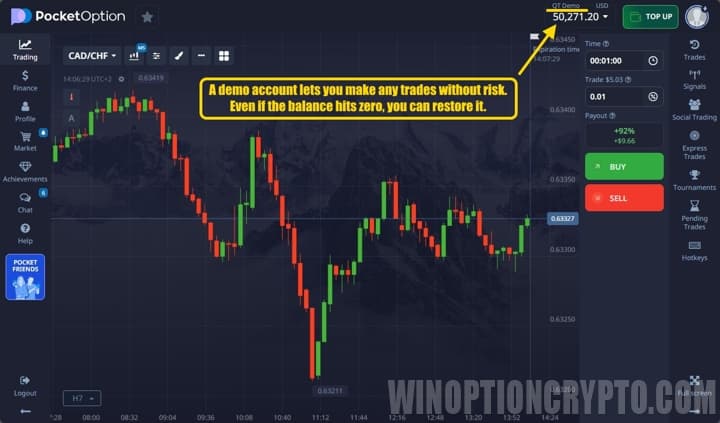
As beginners develop their trading skills, gain experience, and deepen their knowledge of financial markets, they will learn to build their own effective strategies that generate income from trades on various assets.
When figuring out where to begin and how to profit from binary options, beginners should pay attention to tools designed specifically for inexperienced traders. A demo account is one option, but free binary options tournaments are another excellent way to gain initial trading experience. Brokers such as Pocket Option and Binarium offer access to such tournaments.
Binary options trading is now available anywhere with an internet connection, and most brokers offer mobile versions of their trading platforms. That said, getting started in binary options is not simply about finding a broker — it begins with understanding what digital contracts actually are. The starting point looks different for every trader. Some who enter the world of binary options already have experience with securities or other assets, which makes it easier to understand the specifics of binary options. Even so, all traders — regardless of background — need to work through a series of steps to build the knowledge and experience required to trade binary options consistently. For complete beginners, this means working through at least nine key steps.
Basics Before You Start Trading Binary Options
Unlike some other financial instruments, binary options are best learned through practice. Engaging directly in trading is more effective than spending all your time studying theory. That said, some foundational knowledge is essential. Before starting to trade binary options, it is recommended to understand the following topics:
- What are binary options;
- How do binary options differ from the Forex market?
- Why binary options can offer high returns;
- How high returns relate to trading risk;
- How trades are placed.
It is also worth exploring books on trading and additional learning formats such as webinars, online courses, and in-depth articles. However, books serve more as a source of background knowledge than as a step-by-step guide. Real skills, habits, and experience come from live trading, when real money is at stake. That pressure is what motivates traders to build sound strategies — which is why, alongside reading, practising on a broker's platform is essential for understanding both the trading process and how the terminal works:
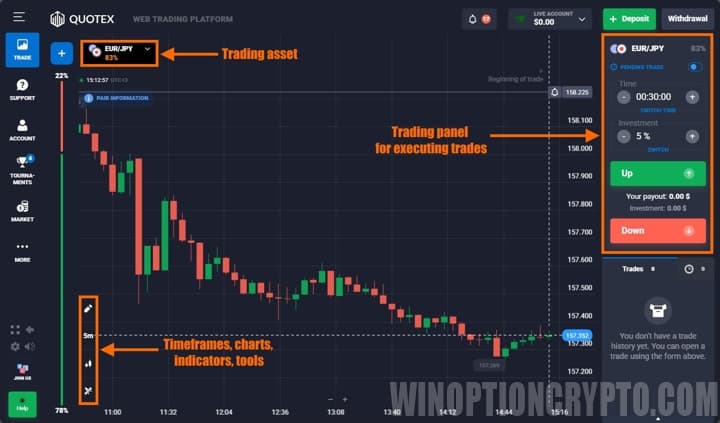
Information on binary options — including how to get started and how trading works — is freely available online. Open sources are also a good way to get familiar with the terminology used by professional traders. A useful reference is the Trader's Dictionary.
Choosing a Broker to Start with Binary Options
Choosing the right broker is a critical part of getting started in binary options. Traders work with digital contracts exclusively through specialised brokers, who provide the platforms and tools needed for trading.
The effectiveness of trading is significantly influenced by which broker a trader chooses, as the right choice helps minimise the risk of financial loss. When evaluating brokers, pay attention to the following criteria:
- Reputation and years in operation. Before registering and depositing funds, research the company thoroughly. Pay particular attention to customer reviews on independent third-party platforms. The information a broker publishes on its own website does not always reflect reality;
- Regulatory status. Regulatory databases can reveal important information — for example, whether a broker has previously been flagged as fraudulent due to illegal activity. One example of such a body is IFMRRC — a private self-regulatory organisation used by some binary options brokers, though it is not a government-backed financial authority.
- Trading conditions. For beginners, it is recommended to start with a minimum trade size of $1. When comparing brokers, pay attention to this parameter alongside the minimum deposit required to open an account;
- Withdrawal methods and processing times. Ideally, a broker should support withdrawals to bank cards, bank accounts, and e-wallets such as Skrill and Neteller. Withdrawal processing should not take longer than one week, with the exception of bank transfers;
- Supported option types. The most popular type of binary options is the call/put contract (predicting whether the price will go up or down). All brokers offer this type, which is considered the most suitable for beginners. Some brokers also support other digital contract types — Deriv, for instance, offers a wide selection;
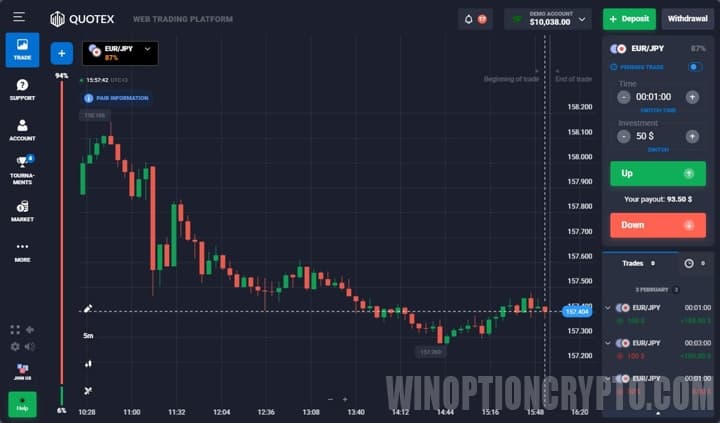
- Platform type and interface. For beginners, a simple and intuitive platform is recommended. As experience grows, traders can move to more advanced platforms with detailed charting tools such as MetaTrader 4 or TradingView. The image below shows an example of a binary options broker's trading platform:
Funding Your Deposit to Start with Binary Options
It is recommended to begin by placing trades with a minimum amount of $1 — the lowest trade size accepted by most brokers. Even at this level, every trade should be placed with care and in accordance with the rules of money management and risk management. These principles are essential for all traders. To illustrate their importance, consider an example in which the chosen strategy allows a maximum risk of 7% of the deposit per trade, and the trader places minimum $1 trades. The table below shows how risk changes after a series of consecutive losing trades at different deposit sizes:
| $, %, deal no. | 1 | 2 | 3 | 4 | 5 |
| Deposit — $15 | $15 | $14 | $13 | $12 | $11 |
| Risk, % | 6.67% | 7.14% | 7.69% | 8.33% | 9.09% |
| Deposit — $20 | $20 | $19 | $18 | $17 | $16 |
| Risk, % | 5% | 5.26% | 5.56% | 5.88% | 6.25% |
| Deposit — $50 | $50 | $49 | $48 | $47 | $46 |
| Risk, % | 2% | 2.04% | 2.08% | 2.12% | 2.17% |
For greater clarity, the results can be displayed graphically:
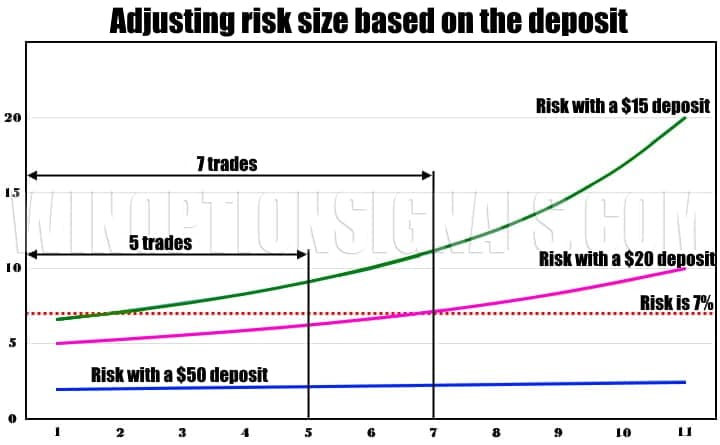
The data shows that a starting deposit of $15 is not viable within the money management framework described. After just two consecutive losing trades, the third trade would already breach the MM rules. With a $20 deposit, a trader can sustain up to six consecutive losing trades before breaking those rules. With $50, that number rises to 36 trades. In other words, the larger the deposit, the lower the risk of losing it entirely. In practice, a trader is unlikely to make 36 or more consecutive losing trades — and in such circumstances, most traders would stop and reassess their strategy before reaching that point.
Based on this, beginners should avoid starting with the minimum possible deposit, regardless of their experience level with digital contracts.
This example illustrates that trading with minimal deposits carries a real risk of loss — even when a strategy's rules are followed correctly. The optimal deposit size is 50 to 100 times the trade size (i.e., with a $1 trade, the deposit should be $50–$100). Under these conditions, a trader has sufficient room to test and refine the chosen strategy.
Account Verification Before Starting Binary Options Trading
Verification is not always mandatory, but it is an important identity confirmation step with many brokers. To complete it, the trader submits documents after registering on the platform — the required documents and acceptable formats are specified by the broker. Verification is most commonly required to prevent clients from opening multiple accounts and engaging in fraudulent activity. Completing verification can also make the trader eligible for bonuses offered by some brokers.
Choosing a Binary Options Trading Style
A common question among binary options traders — especially beginners — is which trading method to choose. There is no single correct answer, but the following criteria should guide the decision:
- The type of binary options the trader will work with;
- The amount of time the trader is able to dedicate to trading;
- Trading style — aggressive (higher risk, higher potential return) or conservative (lower risk, lower potential return).
Before starting, many beginners fall into the trap of assuming binary options are an easy way to make money quickly. This often leads them to choose an aggressive trading style — typically binary options scalping with very short expirations:
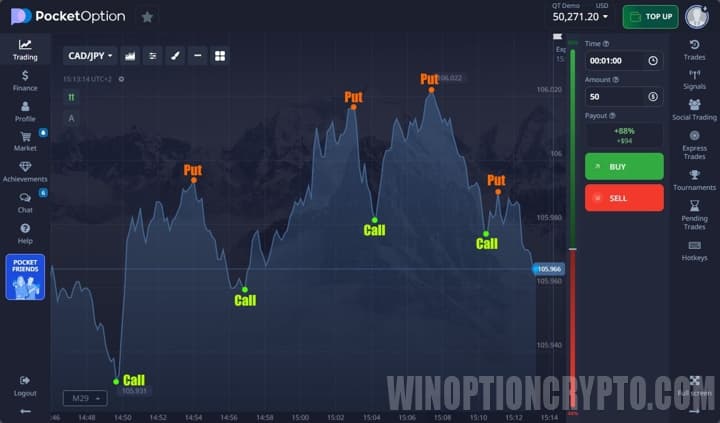
The image above shows a series of trades that would generate very large returns using very short expirations (30 to 60 seconds). However, accurately predicting every price reversal shown on the chart is virtually impossible — and in practice, results typically look more like this:
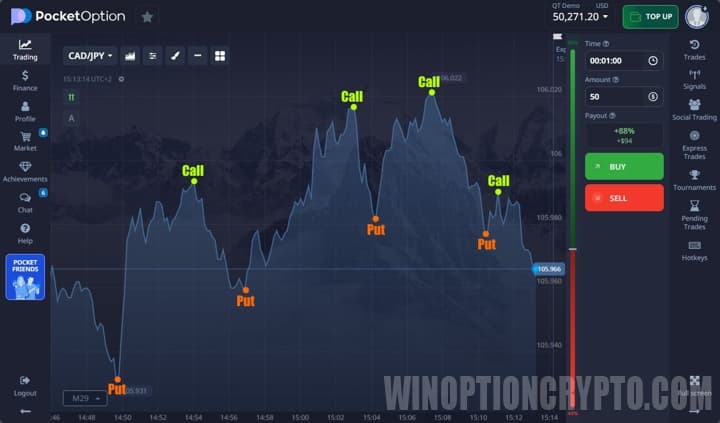
When starting out, it is better to work with contracts that carry predictable risk — that is, to trade assets whose prices are not subject to extreme volatility. For this reason, novice traders should avoid turbo options. This contract type demands rapid decision-making under pressure, requiring a level of psychological resilience that takes time to develop.
In the early stages, avoid trading on timeframes shorter than five minutes. Rather than growing the deposit quickly, this is more likely to result in losing it. Beginners should also avoid trading many different assets simultaneously. Starting with a small number of currency pairs keeps the number of trades — and the associated stress — manageable.
Choosing a Trading Strategy for a Successful Start in Binary Options
Despite the fact that many people compare binary options trading to gambling, the two have nothing in common. Consistent profit from digital contracts cannot be achieved through guesswork alone — the success of every trade depends directly on choosing the right trading strategy (TS). This is a non-negotiable requirement for all traders, regardless of how simple the underlying mechanics of binary options may appear.
The apparent simplicity of binary options often leads traders to place positions at random, but this approach rarely succeeds and typically results in the deposit being depleted quickly. It bears repeating: the effectiveness of binary options trading depends directly on the quality of the strategy being followed.
There are many strategies available for binary options, and they are continually being refined and adapted to current market conditions and the needs of individual traders. One of the simplest and most well-known approaches is to use two moving averages with different periods:
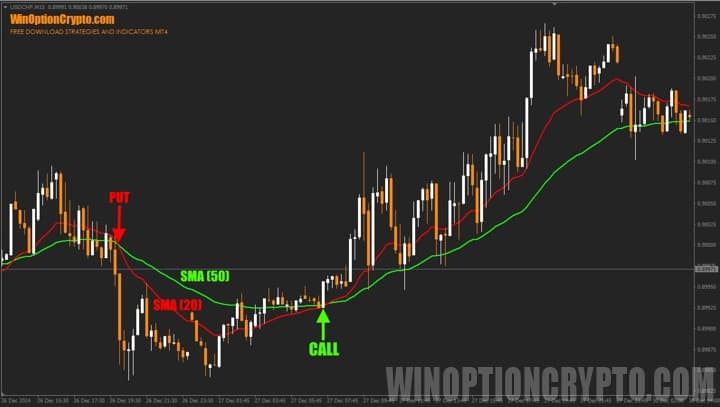
Any chosen strategy should first be tested on a demo account. If it proves effective, it can then be applied to live trading. Even then, the strategy should be regularly adjusted to account for changing market conditions.
When selecting a strategy, consider your trading style, preferred timeframe, and your own skills and experience. At the initial stage, the following strategy types are worth exploring:
- Indicator-based strategies. Indicators are useful because they provide relatively clear and timely signals for when to open a trade. However, they have a notable drawback: sudden sharp market moves can cause indicators to generate false signals, which may lead to losses for unprepared traders. Despite this, indicators are a helpful way for beginners to get comfortable in the market and understand the fundamentals of trading digital contracts. Once that foundation is in place, traders can progress to technical analysis and other trading methods. Indicators suitable for beginners include: Stochastic Oscillator, RSI, MACD, and Bollinger Bands;
- Graphical analysis strategies. Graphical analysis encompasses Price Action and candlestick analysis. These approaches use Fibonacci retracement levels, trend lines, chart patterns, and other tools. They require specific skills — in particular, the ability to annotate charts accurately, which introduces a degree of subjectivity. Traders can sometimes identify patterns that are not actually present, which affects the quality of their trades. To reduce this risk, tools such as Price Patterns indicators can help by automatically detecting patterns on the chart. For candlestick pattern identification, the Japanese candlestick indicator is a useful aid;
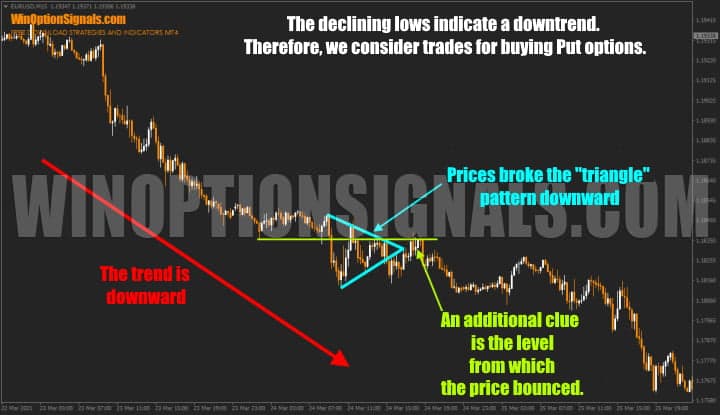
- Combined trading strategies. Many traders combine multiple approaches. For example, Bollinger Bands may be used to identify potential reversals, while candlestick patterns serve as a confirming filter to reduce false signals. Trend identification and key levels can be incorporated using a selection of trend indicators and support and resistance level indicators. Combined strategies are most commonly used by experienced traders; beginners typically focus on mastering one instrument at a time.
An example of a combined strategy, in which the trend is identified first and then a chart pattern is analysed to assess the likely price movement:
Starting Binary Options Trading and Analysing Results
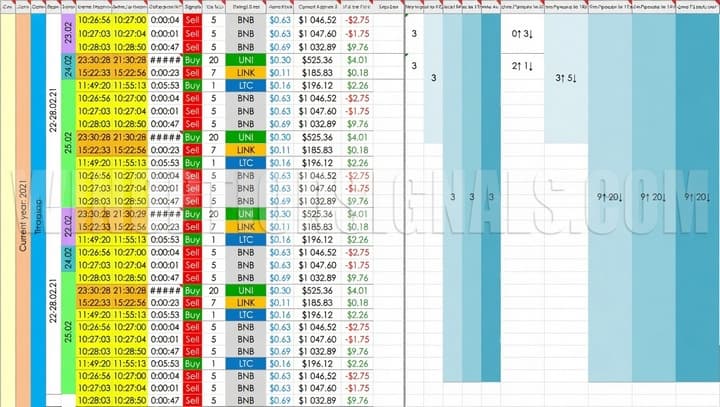
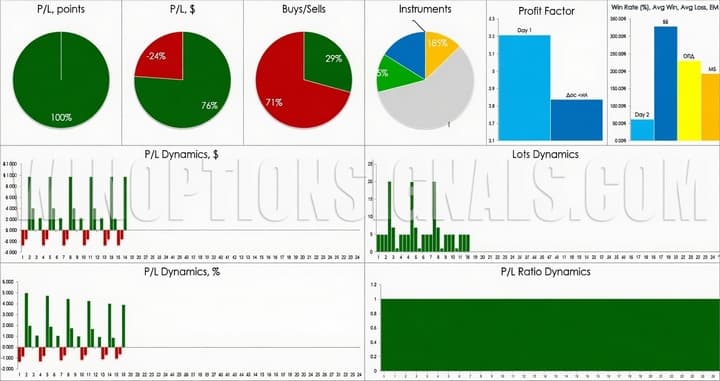
Trade history can be accessed through the relevant section of the trading terminal or personal account. However, tracking your own performance goes beyond reviewing platform statistics. It is strongly recommended to maintain a personal trader's diary, recording each trade along with all relevant details. This applies to both beginners and experienced traders.
The diary can be kept in any format, provided the information is detailed and clear to the trader. It should include the time a trade was opened and closed, the trade parameters, the direction of price movement, and the reasons for entering the trade.
A trading diary is valuable because it provides current data for ongoing market analysis. It helps a trader identify:
- which currency pairs are not currently generating returns;
- the least effective days and times for entering the market;
- early signs that the chosen strategy is underperforming.
The diary should be started on the very first day of trading:
| Trade data | Trade statistics |
 |
 |
A trader's next steps depend on how trading is progressing. If the chosen strategy is producing positive results and the deposit is growing consistently, the trader has several options:
- withdraw all funds from the deposit (though this is not recommended if the trader intends to continue trading);
- reinvest part of the profits into new trades;
- reinvest all profits back into trading.
For beginners, the second option is recommended: investing only a portion of profits into new trades. This approach has a positive effect on the trader's psychological state — seeing a real return from trading provides motivation, while the partial withdrawal limits the rate of deposit growth and preserves some gains. It is also advisable to review and adjust the chosen approach regularly. For example, if the deposit is growing steadily, the trader might consider revising the strategy to accept slightly more risk in pursuit of higher returns — one way to do this is by gradually increasing the trade size in proportion to the deposit's growth.
Recommendations Before Starting Binary Options Trading
Following a few straightforward trading guidelines can help reduce the number of losing trades and help beginners avoid common mistakes.
Asset Volatility
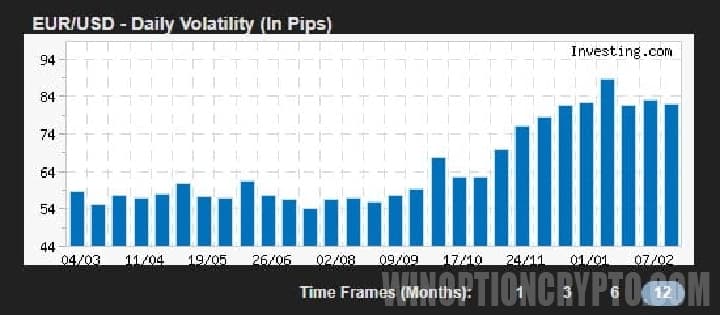
Volatility is one of the most important parameters to consider when trading binary options. It changes noticeably throughout the day and is directly influenced by which trading sessions are active. Price movements are at their greatest during periods when the American and European exchanges are both open:
Market behaviour can broadly be divided into two categories:
- high volatility, in which asset prices change rapidly;
- low volatility (flat), in which price movement is slow and range-bound.
Separate strategies are suited to each condition:
- When using a strategy designed for slow markets, entry points are typically found after the American session closes. Many traders carry out such operations during the night hours. However, brokers often reduce payout percentages during periods of low market activity.
- Strategies designed for high-volatility conditions cannot be used effectively at night.
It is worth noting that low volatility can sometimes occur even during European and American trading sessions.
Exotic Currency Pairs
Many inexperienced traders struggle to decide which currency pairs to trade. Today, brokers offer access to more than 100 types of assets, but there is no single strategy that works equally well across all of them.
For example, a strategy that achieves a 65% success rate on GBP/USD and EUR/USD may produce losses when applied to commodities or precious metals. This divergence is most pronounced when indicator-based strategies are used. Strategies based on candlestick patterns and graphical analysis tend to transfer better across different asset types.
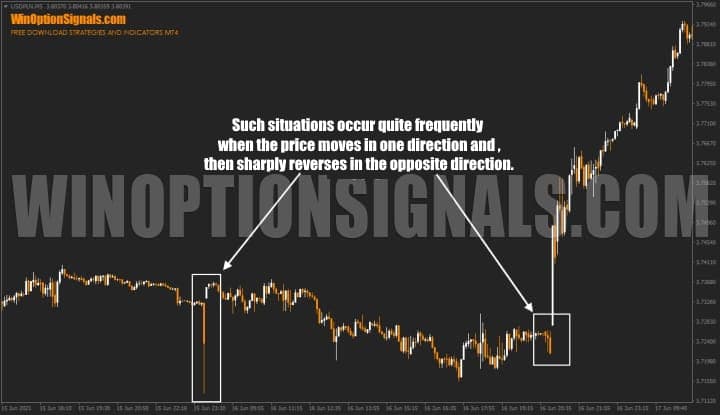
For novice traders, exotic currency pairs carry particular risks. These assets are sensitive to geopolitical factors, which can cause the price to move sharply in a very short period — creating what is known as a gap. On the chart, this manifests as a price that remains stable for many days and then jumps sharply up or down following a news event, with the move measured in hundreds of points:
Trading exotic pairs is also difficult to justify given the nature of binary options: profit does not depend on how far the price moves, only on which direction it moves within the specified timeframe. There is therefore no benefit to taking on the additional risk that exotic pairs bring.
Complex Trading Approaches
The range of trading strategies extends well beyond those described above and is constantly expanding. Some of these strategies are classified as complex or professional — and as a rule, they do not translate well to binary options. Successful binary options trading requires identifying precise entry and exit points and acting quickly on signals from indicators and other tools.
For example, some traders use Elliott Wave analysis when trading financial assets. This technique holds that the main trend unfolds across five waves, while the correction consists of three. However, applying this analysis in real time to a live chart is extremely difficult, as it is rarely possible to identify a clear entry point. In practice, a trader using this approach may find it very hard to determine when to enter a binary options trade:
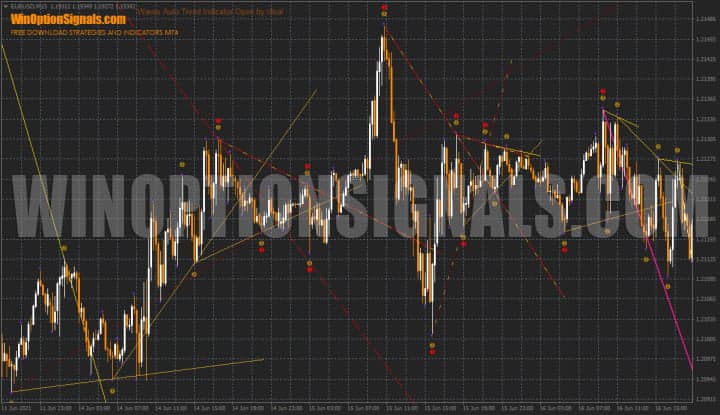
For binary options traders — especially beginners — the best approach is to stick to simple, well-understood strategies that have proven their effectiveness. Using unconventional or overly complex methods significantly reduces the chances of making a consistent profit.
News and Fundamental Analysis
The economic calendar is an important fundamental analysis tool that shows the dates and times of news releases capable of affecting the market. For example, if US GDP data is due to be released shortly, it may be wise to pause trading temporarily. Such data directly affects the dollar exchange rate and a range of related assets. Major releases like GDP figures can trigger sharp price moves that make binary options trading unreliable during that period.
Since profit in binary options depends on correctly predicting the direction of price movement — not the magnitude of the move — sudden sharp swings driven by news events are particularly disruptive.
In the economic calendar, it is recommended to track news related to the following:
- employment and unemployment rates;
- central bank interest rate decisions;
- inflation and GDP data;
- election results and decisions by regulators and governments;
- comments from senior government officials on the state of the economy.
The last point is especially relevant for traders who work with cryptocurrencies, as negative or positive news related to digital assets can cause price movements of 10% or more within just a few hours.
Signals for Binary Options
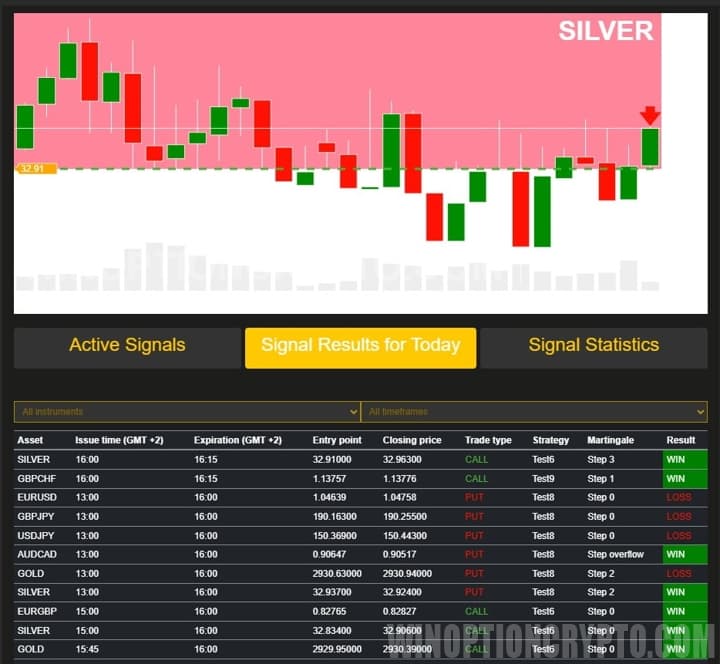
Many experienced traders point out that trading signals are a valuable tool for decision-making, particularly when getting started with digital contracts. Signals simplify the trading process considerably. On our website you can find:
- standard binary options signals;
- signals based on candlestick patterns.
Each signal should be verified against the current chart before acting on it. Signals are best used as an additional input rather than the sole basis for a decision — the final call should always be informed by your own market analysis. Even so, they are a useful tool and should not be dismissed.
Trading Advisors and Robots for Binary Options
Trading advisors refer to binary options robots — automated algorithms that use refined filters and settings to analyse the market. These tools can be genuinely useful, as they analyse price movements across the full trading history of specific currency pairs.
That said, the signals produced by these algorithms should not be followed blindly. The information they provide should always be verified on the chart. In particular, not all robots are capable of accounting for news events that affect exchange rate movements.
Conclusion
Binary options trading is a relatively accessible way to participate in financial markets. The platforms available today offer user-friendly interfaces that make placing digital contract trades straightforward. The mechanics are simple: determine the direction in which the price will move and the timeframe over which that movement will occur.
Despite this apparent simplicity, consistent success in binary options trading depends on the effectiveness of the chosen strategy, the trader's experience, the quality of their analysis, and other factors. Sound psychological preparation is equally important, as is learning to avoid the mistakes that are typical among newer traders.
To leave a comment, you must register or log in to your account.