
 The internet is full of heated debate about binary options as a way to earn money. Many people question whether it is genuinely possible to profit from options trading, or whether binary options are simply a scam — no different from slot machines, lotteries, or sports betting.
Experts hold differing views and offer arguments on both sides. To settle the question properly, let's look at it from multiple angles: is binary options trading a scam or a legitimate activity? And is most of the negative commentary simply coming from traders who failed to make money?
Binary Options — Scam?
There are various reasons why binary options are labelled a scam, though these reasons are not always well-founded. The most common claim is that trading binary options is equivalent to gambling at a casino. However, many of these accusations come from traders who simply lost money and are looking for somewhere to place the blame. Let's examine each argument in turn.
Binary Options vs. Casinos
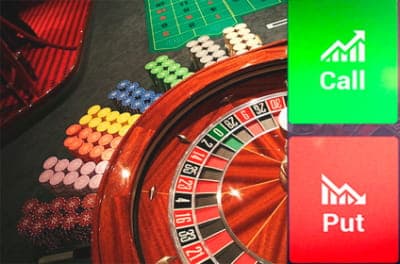
Some people compare binary options trading to roulette or slot machines. Classic land-based casinos may be unfamiliar to many people, but most have a general sense of how an online casino works.
Casino outcomes are unlikely to be truly random — the operators have no intention of being generous to their players. Extensive documentation exists on rigged algorithms and manipulative mechanics in online casinos, which is why they cannot be considered a legitimate income source. Most are straightforward scams.
Binary options brokers do not set the quotes for trading assets themselves — these are determined by the market. Because brokers receive market data in real time, there is no practical way for them to manipulate price movements in their favour. That said, it is not surprising that some traders view binary options as a scam: most newcomers enter the market with no understanding of how exchanges work or how global markets operate.
 Professional traders with real experience know how to verify a currency pair or commodity price across multiple independent sources. Many keep a trading journal for later analysis. They would quickly identify any manipulation — which would lead to serious public backlash, damaging a broker's reputation, costing them clients, and potentially their licence. A broker caught acting dishonestly will find that word spreads fast, and the company will earn a reputation as a fraudster in short order.
Another point in favour of reliable brokers is that they place no restrictions on successful traders. Legitimate brokers pay out profits consistently to those who trade profitably. Bookmakers and casino operators, by contrast, actively work to prevent this.
There is also significant competition among serious brokerage firms, which drives them to improve their services and develop their trading platforms. The more satisfied clients a broker has, the better — large, reliable brokers have no rational incentive to cheat their users. It is in their interest to attract more traders and generate healthy transaction volume. This in turn allows brokers to offer better conditions and competitive payout rates, which can reach 90% or more. However, if a broker advertises a guaranteed return of 95% on every single trade, treat that as a warning sign.
Ignoring Risk Management
Beginners typically enter trading with one goal: earn as much as possible, as quickly as possible. This mindset is one of the primary causes of losses and often leads new traders to conclude that binary options must be a scam.
Quick profits are genuinely possible with turbo options (expiration time of 30 to 60 seconds), which is why this type of option generates the most complaints — about suspicious price movements, unexplained spikes, and alleged manipulation. But trading outcomes depend heavily on the trader's own behaviour and discipline. Anyone who takes on excessive risk, ignores money management and risk management principles, or uses the Martingale system without properly understanding it will almost certainly blow their account. Beginners are rarely aware of these risks or the importance of trading psychology, and even when they are, they often ignore the rules — losing their entire deposit quickly and then blaming the broker rather than their own approach.
Only a disciplined, measured approach allows a trader to grow their initial investment consistently. Among turbo options traders, such discipline is the exception rather than the rule — and it is this group that most frequently asks: are binary options a scam?
Lack of Preparation
 Inadequate preparation — or none at all — is another very common problem among beginners. A typical scenario: a new trader spends a few days on a demo account, grows a $10,000 virtual balance to $13,000–$15,000 in a matter of hours, and concludes that live trading will be just as easy. The funded account is usually wiped out quickly, and the trader concludes that binary options must be a scam — after all, it worked on the demo.
For trading to be consistently profitable, significant time must be spent practising on a demo account and testing different approaches. To accelerate the learning process, focus on the following:
- Foundational training. A solid grounding in the basics of binary options trading is essential. You can study independently or use the educational materials most brokers provide.
- Learning the trading platforms. Beyond your broker's platform, it is worth becoming familiar with MetaTrader 4 and TradingView. Also explore the live chart for binary options, which lets you work with indicators and strategies without installing additional software.
- Trading techniques. There are many approaches to trading binary options, from indicator-based systems to clean chart analysis using candlestick patterns and similar methods.
- Building your own strategy. After studying existing approaches, settle on a trading style and develop a binary options strategy that suits you.
- Risk and capital management. As discussed above, proper risk management is critical. Never risk more than 5% of your deposit on a single trade.
A stable income from trading requires education and experience — there are no shortcuts. Trading is no different from any other profession: skill takes time to develop. Once you are consistently profitable, the question of whether binary options are a scam will answer itself.
Fraudulent Binary Options Brokers
To avoid losing confidence in binary options from the outset, it is important to register with a reliable broker. Legitimate brokers do exist in large numbers, but so do fraudulent ones willing to do almost anything to take clients' money. Some companies, alongside providing market access, also sell "revolutionary" strategies or paid training from supposed "experts." Aggressive promotion of such products is a clear warning sign. When starting out, always opt for free binary options education.
Fraudulent brokers use a range of tactics to deceive traders, including blocking accounts, withholding profits, and manipulating bonus conditions.

Be cautious with any generous deposit bonuses. The catch is typically buried in the small print. To withdraw your own funds, you may be required to reach a trading volume many times — sometimes a thousand times — greater than the bonus amount. This creates pressure to trade recklessly, which reliably leads to losing the deposit.
Always read the full terms and conditions of any offer or bonus before accepting it, especially when it is being heavily promoted.
Notable examples of fraudulent or questionable brokers include:
- BinTradeClub;
- Logatomtrade;
- KingTrade Pro;
- StarsBinary.
These are far from the only bad actors — there are dozens more.
BinTradeClub, for example, displayed the following problems on its website:
- Numerous errors throughout the site;
- A user agreement copied from other websites with no relation to actual trading conditions;
- Links to fake or unrelated social media profiles, including Instagram;
- A poorly built and barely functional web trading terminal.
If a broker struggles to process small withdrawals of up to $100, larger amounts are clearly out of the question.
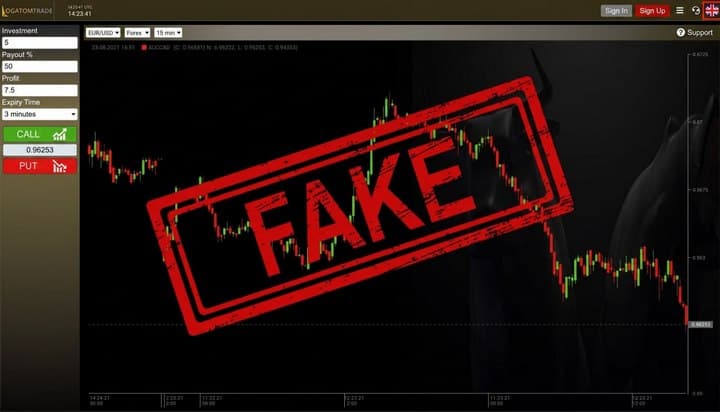
Logatomtrade generates fake positive reviews and claims awards it has never received. More seriously, the trading platform displayed on its website is purely decorative — it cannot actually be used to trade. Before a deposit is made, you can see price charts moving and trading buttons displayed. As soon as funds are deposited, trading becomes impossible:
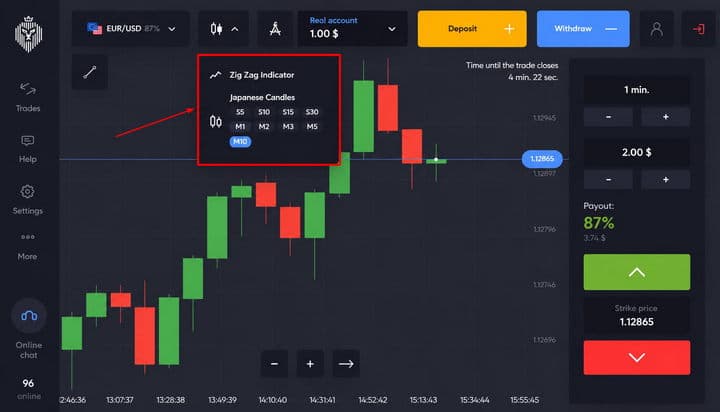
KingTrade Pro appears legitimate at first glance but advertises option returns exceeding 100% — something no sustainable binary options broker can offer, as it would make it impossible to hedge risk. The broker also charges account maintenance fees, and withdrawals require meeting a trading turnover threshold similar to a bonus condition. The trading platform itself is poorly equipped: it offers only three indicators, four charting tools, a maximum timeframe of 10 minutes, and no way to view historical price data:
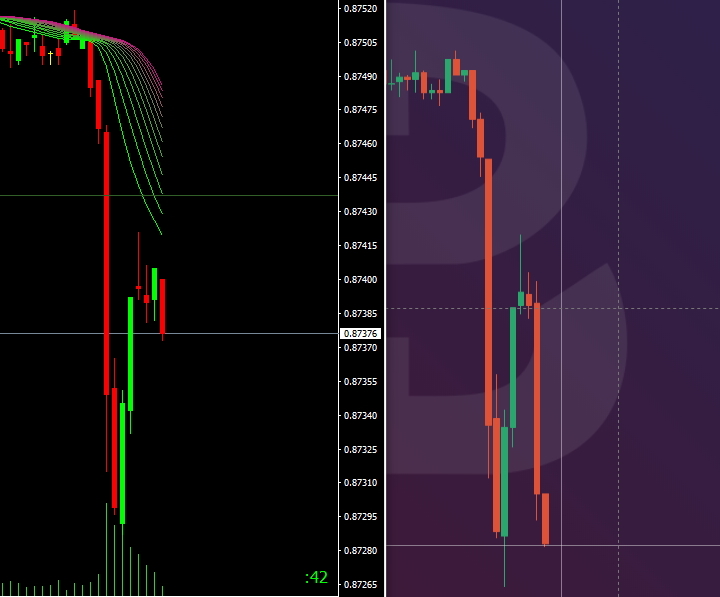
StarsBinary presents itself as an innovative broker but provides almost no substantive information on its website. Previously, many of its links pointed to unrelated third-party resources. Like KingTrade Pro, StarsBinary offers a very basic trading platform — its maximum timeframe is just 1 minute. But the most serious problem is that StarsBinary manipulates quotes directly when it suits the company:
Binary Options Regulation — Does the Legal Grey Area Make Them a Scam?
Binary options do not have a unified regulatory framework across all jurisdictions. In many countries, they occupy a legal grey area — neither explicitly banned nor formally regulated as a financial product. However, the absence of dedicated local legislation alone is not sufficient grounds to label binary options a scam.
Most brokerage companies operate legally under licences issued by recognised international regulators. Obtaining even such a licence is not straightforward — companies must submit extensive documentation, undergo audits, and meet ongoing financial requirements.
Who Regulates Binary Options?
Reliable brokerage companies voluntarily obtain licences from international financial regulators. The most widely recognised include CySEC (Cyprus), the FCA (United Kingdom), ASIC (Australia), and self-regulatory bodies such as the Financial Commission (FinaCom), which resolves disputes between traders and member brokers and maintains a compensation fund of up to €20,000 per claim.
In the event of a dispute, traders can file a complaint with the relevant regulator or SRO, which will investigate and take appropriate action — provided the broker holds a valid licence from that body.
Licensed Brokers That Turn Fraudulent
 Another reason the debate continues is that some companies initially obtain a licence but later begin violating their obligations to clients. Traders who lost money in these circumstances understandably view binary options as a deception, particularly when they had no practical means of recovering their funds.
Such cases are relatively rare and tend to involve newer, lesser-known companies. Extra caution is warranted when dealing with recently established brokers. Any broker that acts dishonestly will eventually appear on a regulator's blacklist, making the misconduct a matter of public record.
Binary Options Reviews: Scam or Reality?
We have established that some complaints about binary options have merit, but that losses are most often caused by trader error or dishonest brokers. So why are there so many negative reviews online?
The majority are written by traders who spent very little time practising and moved to a live account too soon, losing their entire deposit. Some did not use a demo account at all — they went straight to real money, lost it, and immediately posted on every forum and review site that binary options are a scam.
Avoiding this outcome requires preparation, as in any other field. No one becomes skilled at a complex discipline overnight, and trading is no exception. There is a significant amount to learn before it can be made consistently profitable.
Many people also focus on the downsides of binary options while overlooking the genuine advantages:
- Simplicity of the trade decision. The trader only needs to decide which direction the price will move. A sound strategy, technical analysis, and discipline are all that is required to start generating income.
- Strong return potential. Returns on a single trade can reach up to 90%.
- Lower psychological pressure than forex. There is no need to monitor an open position and make ongoing decisions about when to exit. Both the return and the closing time are fixed at the moment the trade is placed.
Binary options only become a trap for traders who make avoidable mistakes. For experienced traders, they represent a legitimate income stream. And once you understand the common tactics used by dishonest brokers, you are well placed to avoid them.
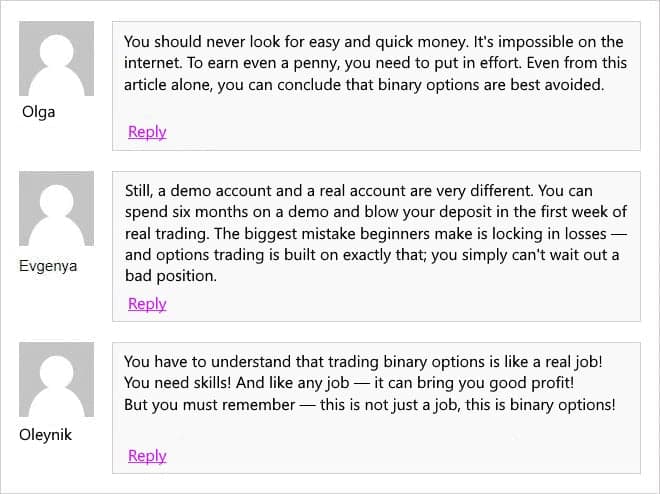
Here are a few reviews from real binary options users:
Binary Options — Scam or Legitimate? What the Experts Say
Financial experts do not classify binary options as a scam. Options were originally developed as instruments for hedging financial transactions — that is, as a tool for reducing the risk associated with investing in or speculating on assets.
Binary options differ from classic exchange-traded options, but share the same underlying concept. It is worth noting that relatively few retail traders engage with options on traditional exchanges — most prefer standard exchange trading. Options are generally considered a more complex instrument, which is precisely why thorough preparation and time spent on a demo account are so important before risking real capital.
Conclusion: Are Binary Options a Scam?
Binary options are a legitimate investment instrument, but avoiding early losses requires understanding the basic rules of trading, knowing which brokers to avoid, choosing a strategy, and testing it on a demo account. Proper preparation and ongoing learning are the most reliable path to consistent profitability.
One of the best ways to assess a broker's trustworthiness is to read reviews from other traders on reputable platforms. Always research a broker thoroughly before committing any funds.
Do not be drawn in by overly tempting offers — if something sounds too good to be true, it almost always is, especially when the broker lacks a valid licence. Pay attention to other relevant factors as well: platform reliability, trading conditions, and whether the broker offers a demo account.
On the central question, the expert consensus is clear: binary options are not a scam, but a legitimate financial instrument.

See Also:
- How to choose a binary options broker
- Binary options broker bonuses
- How do binary options brokers make money
- What beginner traders need to know about binary options
To leave a comment, you must register or log in to your account.