
Binary options have been available for trading for over ten years. However, no one has yet found an effective strategy for the Binarium broker that works in all market conditions. Rather than searching for something that doesn't exist, it's better to focus on proven methods. These aren't always effective, of course — but if you learn to accurately identify current market conditions and follow certain rules, you can build a trading strategy with a high percentage of winning trades. In this article, we'll explore the key factors involved in developing strategies for the Binarium binary options broker.
Contents:
- How to Choose the Ideal Timeframe for a Binarium Strategy?
- How to Combine Binarium Strategies for Maximum Profit
- Selecting an Asset for Your Strategy
- How Trading Experience Shapes Your Strategy
- What Is Your Goal in Trading?
- Conclusion

How to Choose the Ideal Timeframe for a Binarium Strategy?
Before placing any trade, you need to decide on one of the most important parameters in any trading system: the timeframe.
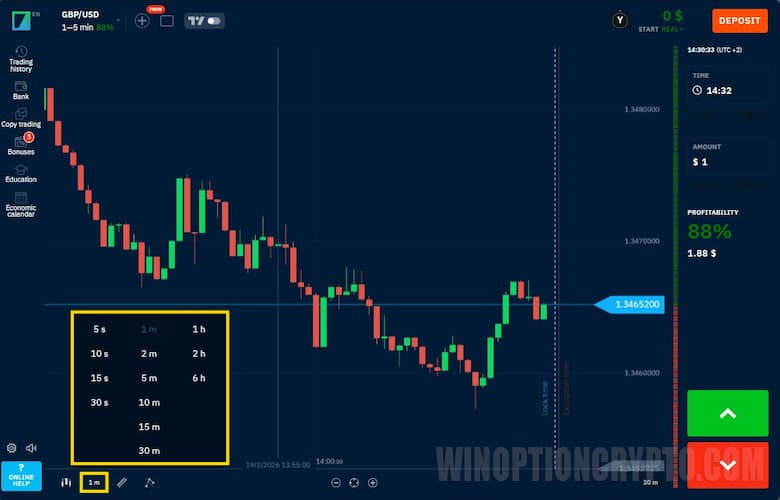
Alongside this, you'll need to set the expiration time for your trades:
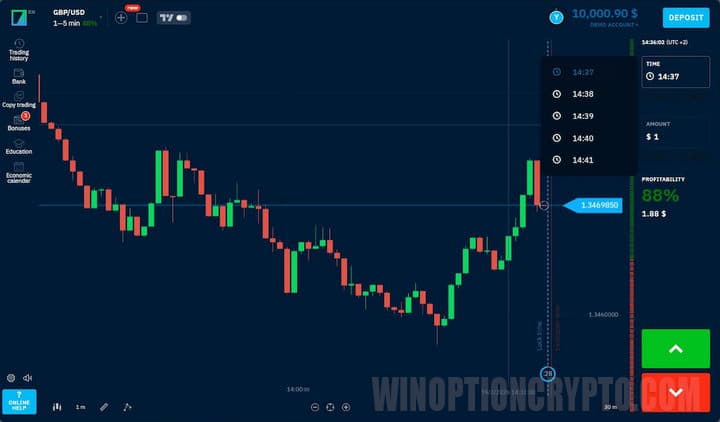
When evaluating trading strategies for Binarium, keep in mind that the broker offers a demo account — a tool that lets you test any trading method on live, real-time quotes across different timeframes.
Some traders prefer holding positions on higher timeframes, ranging from one day to a month. Others trade short-term, with expirations ranging from a few minutes to an hour. Each timeframe has its own rules for opening trades, because the effectiveness of technical analysis tools depends heavily on the timeframe you're working with. While some indicators are broadly applicable across different periods, their settings are most often tailored to a specific asset and timeframe.
Secrets of Low Timeframes
The ideal strategy should suit your personality. Traders who enjoy fast-paced action should focus on lower timeframes, which allow for a high volume of trades throughout the day. Those who prefer a less intense pace and have stronger psychological resilience may be better suited to higher timeframes.
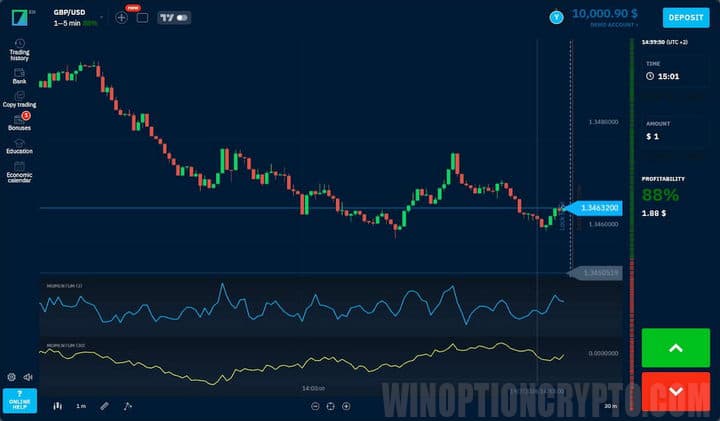
If you prefer the first approach, it's recommended to base your Binarium strategy on technical analysis. Many technical indicators perform more effectively on shorter timeframes, helping to confirm trend direction, anticipate reversals, and pinpoint entry points with a high degree of accuracy.
The Double Momentum strategy for Binarium is built on this approach and produces strong results on low timeframes:
When trading on low timeframes, you can also use signals from moving averages or the Alligator indicator. Using multiple indicators together can improve overall efficiency, with secondary tools serving as filters for the primary entry signal and increasing the likelihood of a profitable trade.
Experienced traders often recommend scalping or breakout strategies to Binarium clients, though these methods are not suitable for beginners. Both approaches perform well in volatile markets where prices move rapidly, but they carry higher risk. That said, they have a proven track record over short timeframes.
Advantages of Higher Timeframes in Binarium
If you prefer longer-term trades, your Binarium strategy should lean on fundamental analysis. Before opening a trade, it's worth consulting the economic calendar and reviewing key news and macroeconomic data by country, as these directly influence prices.
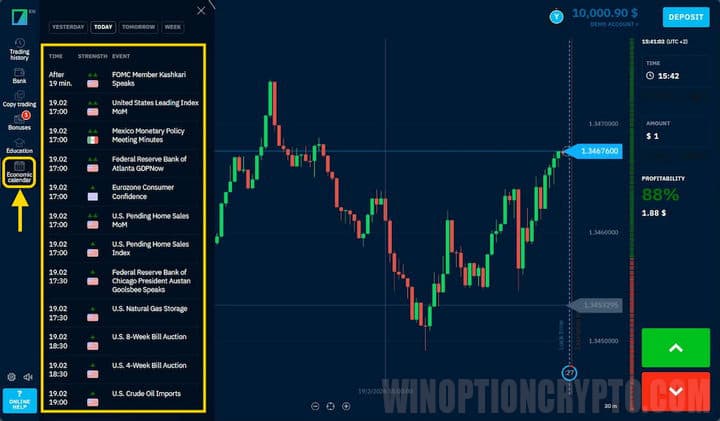
When major news is released, the price of the target asset can move sharply. It's often at these moments that a trend emerges that can last for several days or weeks.
How to Combine Binarium Strategies for Maximum Profit
Both fundamental and technical analysis are useful regardless of your trading timeframe. Breaking news, for example, can sharply move the price of an asset and create short-term trading opportunities, while technical analysis helps identify the direction of a longer-term trend. In the latter case, technical indicators serve as a supporting tool — confirming or contradicting a forecast rather than driving the decision itself.
For this reason, it's recommended to combine different approaches when trading on the Binarium platform and to adapt your strategy as market conditions change.
Selecting an Asset for Your Strategy
When developing a trading method, it's important to account for the specific characteristics of your chosen assets. Many new traders spread their activity across multiple financial instruments — currency pairs, stocks, and others — in an attempt to increase profits.
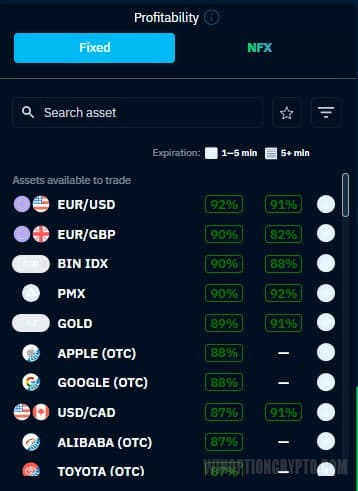
This approach, however, tends to produce losses rather than gains, as beginners often struggle to account for correlated assets and price fluctuations, leading to poorly timed entries. Experienced traders do trade multiple assets, but typically limit their exposure to two or three instruments. Over time, they develop an understanding of how assets interrelate and how they respond to external factors such as news and market sentiment — but this kind of awareness comes gradually.
Before you start trading, it's worth understanding that there are no universally suitable assets. Your choice of instrument will largely depend on your preferences and your approach to market research. Forex trading, for instance, requires familiarity with concepts such as base and quote currencies, spreads, and swaps. Trading stocks and bonds calls for an understanding of the issuing company's financial statements, dividend policy, cash flow, and earnings.
Cryptocurrencies are generally considered the most difficult asset class to forecast, as prices are influenced not only by fundamental factors but also by regulatory decisions and the moves of large investors. The more you know about a financial instrument, the easier it becomes to choose an effective strategy for trading it.
How Trading Experience Shapes Your Strategy
Personal experience plays a significant role in shaping your approach to forecasting and trade execution. Beginners are advised not to adopt the same methods used by traders with five or more years of binary options experience.
As your knowledge and experience grow, you can incorporate more sophisticated approaches. That said, simpler methods don't stop working over time — in practice, successful trading usually involves combining elements from different strategies.
What Is Your Goal in Trading?
Trading effectiveness is also shaped by your goals. These might include hitting a specific profit target, generating a steady income stream, or making trading a supplemental — or primary — source of income.
Your goals will largely determine whether you gravitate toward short-term or long-term trading. Having clear objectives makes it easier to set priorities, manage risk, and calculate how much you're prepared to invest in a single trade or a series of trades over a given period. Clear goals also make it easier to develop a trading plan. For example, a trader with limited capital might choose to cap the number of trades per day.
Conclusion
Developing a binary options trading strategy is a complex and ongoing process. Breaking it down into individual components makes it more manageable: once you've settled on your trading style, you can select your assets and build a concrete plan with defined rules for opening Call and Put options.

To leave a comment, you must register or log in to your account.