
Today, virtually everyone has heard of the trading profession. Popular TV series and films have created the image of the "Wolf of Wall Street" — someone who makes money by pressing buttons in front of a monitor. But these ideas about how traders and financial markets actually work are far from reality. The image of a "rich kid" living in luxury ignores the key element of this activity: uncertainty.

In this article, we will look at the main aspects of the trading profession: income opportunities and the risks that come with them. We will also compare the earnings of institutional and independent traders, find out how much binary options traders earn, and discuss the specifics of cryptocurrency trading.
Contents:
- Key Findings
- What Is Trading and Who Is a Trader
- Types of Traders and Trading Strategies
- Requirements for the Profession of a Trader
- How Much Does a Binary Options Trader Earn
- Long-Term Earnings Prospects
- Specifics of Cryptocurrency Trading
- Path to the Profession
- Risk Management and Typical Mistakes
- Conclusion
- Frequently Asked Questions (FAQ)
Key Findings
- Learning is essential — trading is not a simple profession.
- A trader's income depends on the strategy, capital size, and acceptable risk levels.
- Anyone can start making money in the markets.
- Learning to manage risk is critically important.
- Discipline is non-negotiable.
- Your trading results will depend on your ability to follow your own rules.
What Is Trading and Who Is a Trader

When it comes to trading, most people picture a "white collar" Wall Street worker who watches charts of indices, stocks, currency pairs, or cryptocurrencies from morning until night, trying not to miss the right moment to buy or sell an asset. And it is worth noting that this image is not entirely wrong.
However, trading is more than just speculation — exchanging one instrument for another, as with currency pairs and cryptocurrencies, or buying cheap in order to sell at a higher price, a strategy familiar to any value investor.
Trading is a complex process that requires a deep understanding of financial markets. It resembles an oriental bazaar where participants trade not only various goods, but also money itself, securities, bonds, and derivatives whose value depends on other underlying assets.
 At the center of this entire process is a trader, who can in some sense be called a predictor of the future. The difference between a trader and a fortune teller, however, is that a trader makes decisions not on the basis of card symbolism or a client's emotional state, but on the analysis of vast market data, macroeconomic statistics, news from the economic calendar, and their own experience.
This is how a trader uses trading tools and market liquidity to forecast future price movements across various assets. However, as you might expect, this does not always go to plan — fear, greed, and unexpected events all get in the way. To reduce the risks associated with unpredictable price fluctuations, traders often resort to hedging — a form of insurance against adverse market movements.
Imagine you are a large grain producer who wants to protect yourself against a possible decline in wheat prices. You can enter into a contract to sell your future harvest at a fixed price, so that if wheat prices do fall, you can still sell your crop on the more favorable terms set out in the contract.
Types of Traders and Trading Strategies
Now that we have a general understanding of what traders do, it is time to discuss whether there are differences between them — or whether they are all essentially the same. There are differences, and quite significant ones.
All traders can be classified by the time they hold open positions, known as the holding period.
Note: The period between opening a trade (for example, buying shares on the stock market) and closing it (selling those shares) is called the holding period.
The shortest-term traders are called scalpers. Scalping involves holding positions for a few seconds to a few minutes. This style is especially popular among binary options traders. Scalpers can make 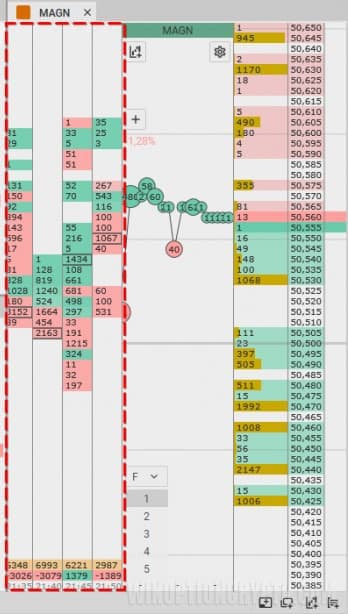 a large number of trades during a single session — sometimes hundreds. For convenience, they typically use specialized trading software built for high-speed execution.
Such software is specifically designed for high-speed trading, where order routing speed is paramount. Whoever fills a counter order at a favorable price first wins — this is essentially how algorithmic traders operate.
For example: if you buy 1,000 shares of a company at $50.53 and sell them at $50.60, you earn $70 before commissions. Execute 100 such trades per day, and your gross profit comes to $7,000 before deducting costs.
If super-aggressive trading is not your style and you prefer a calmer approach, day trading may be worth considering. In this strategy, trades last longer than in scalping — day traders typically open a position at the start of a session and close it by the end of the trading day. To trade this style successfully, you need to master technical analysis and develop a range of practical trading ideas.
Keep in mind, however, that scalping and day trading are only suitable for professional traders who trade as their primary occupation. Beginners are better served by swing trading, where positions are held for longer periods — from several days to weeks — in order to capture a significant price move.
Positional trading is the most conservative style, involving holding positions for many months or even years. In this approach, the trader relies on fundamental analysis, corporate earnings reports, macroeconomic indicators, and industry trends. The time commitment is minimal, and the potential gains can be substantial. This style is widely used by cryptocurrency traders.
Requirements for the Profession of a Trader
Making money in a fast-moving market is no easy task. To earn a reasonably stable income in financial markets, a trader must possess a unique combination of skills and qualities.
Analytical thinking and self-discipline are the most important of these. No matter how thoroughly you study Japanese candlestick patterns, Elliott waves, or complex trading rules based on Gann's cycles, the outcome of your trading will ultimately depend on your psychological stability.
Many people know how to plot charts and read technical indicators, but only a few can keep their composure during periods of market volatility and control their emotions under pressure.
Mastering the trading terminal, technical analysis, and fundamental analysis is not impossible — anyone with a background in economics or a technical discipline can learn order types, risk management principles, and the mechanics of financial markets. However, the ability to make measured decisions under the pressure of potential capital loss is the cornerstone that ultimately determines a trader's income.
Necessary Qualities of a Trader
To become a good trader, it is not enough to simply know technical analysis and understand how to trade various assets — you also need certain character traits:
- Self-control helps manage emotions, overcome fear and greed — forces that haunt many traders, often leading to losses and reduced income.
- Psychological stability allows you to calmly wait for trading signals from indicators rather than opening trades out of boredom or fear of missing a move.
- Discipline helps you stick to your trading plan even when market conditions are unfavorable for your strategy.
On the other hand, certain personal qualities can hinder success:
- Impulsiveness causes hasty decisions without proper analysis of the situation.
- Fear of losses can be paralyzing, preventing you from making money: a trader either takes profits too early or holds on to losing trades instead of accepting the loss and continuing to follow the trading strategy.
- Overexcitement. The desire for quick profits leads to excessive risk-taking and, as a rule, to a complete loss of capital.
Comparison of Trader Salaries
All traders can be divided into two types: professional institutional traders and independent traders working for themselves. Each has its own income structure and earnings level. Let's look at how much traders actually earn.

First, it is important to understand that trading income is highly variable. It depends on many factors: trading strategy, experience, discipline, and — not least — the compensation structure of a particular organization.
An institutional trader works for a large financial institution, such as an investment bank or a hedge fund. Their compensation consists of a fixed base salary and bonuses, the size of which directly depends on trading performance. The benefits of such a position are obvious: stable income, access to managing large amounts of capital, and training and technical support from industry specialists.
However, as with any job, there are drawbacks: strict restrictions on trading operations (often written into legislation — for example, mutual funds may be prohibited from investing more than a set percentage of their assets in a single company or sector) and highly competitive hiring.
An independent trader works solely for themselves and is accountable to no one. On one hand, this is appealing — you trade when you want and step away when you choose. But behind this freedom and flexible schedule lies full responsibility for the outcome. An independent trader's income depends entirely on the growth of their account, so consistent profitability is the only way to sustain the activity. That requires continuous learning and improvement.
|
Criterion |
Institutional Trader |
Independent Trader |
|
Income stability |
High |
Low |
|
Income size |
Limited |
Potentially unlimited |
|
Freedom of action |
Limited |
Complete |
|
Risk |
Low |
High |
Work in the Company (Institutional Trader)
As established above, an institutional trader is a professional who manages large amounts of capital. They may work at an investment bank, a hedge fund, or an insurance company.

Getting into this profession is not easy. A solid foundation in economics or finance is essential — without a strong grasp of financial markets and well-developed analytical skills, no one will entrust you with managing significant capital. From there, the specific requirements depend on where you intend to work. In the US, most institutional trading roles require passing the FINRA Series 7 exam (the General Securities Representative Examination), which licenses you to trade a broad range of securities. In the UK, the relevant benchmark is the Investment Management Certificate (IMC). For those aiming at global investment management roles, the CFA (Chartered Financial Analyst) designation — issued by the CFA Institute and recognized worldwide — is widely regarded as the industry gold standard.
Only certified specialists with a solid understanding of current financial market regulations are permitted to manage the capital of collective investment vehicles such as funds.
Institutional traders working for financial companies can expect a base salary — typically quite high — along with performance bonuses tied to the fund's returns over a reporting period, risk compliance, and other metrics set by the investment committee. Both components are funded from the so-called "management fee," which investors pay for capital management services.
The performance of professional fund managers is measured not simply by the percentage return on capital, but by how their results compare to a market benchmark — the index they track. If the fund manages to beat the market (delivering returns above the target index, such as the S&P 500), the period is considered successful, and managers receive a bonus on top of their base salary.
Under this compensation structure, a trader working for a company is focused on long-term results. Career progression is largely open-ended. A trader may specialize in one area — such as derivatives trading — or participate in complex projects involving financial engineering to create structured investment products.
Independent Trader
Self-directed trading appeals to many aspiring traders. But is it right for you? Let's take a closer look at how much traders earn when working for themselves.
The work of an independent trader closely resembles that of an entrepreneur, with the key difference being that they transact with counterparties in financial markets rather than with suppliers. At the same time, they are not bound by the strict obligations and contracts that govern institutional traders, and enjoy complete freedom in their decision-making.
However, that freedom comes at a price — it must be earned through responsibility, deep knowledge, and psychological stability. 
Independent traders typically operate in the Forex and binary options markets. These segments are popular because they offer flexibility in decision-making, the potential for significant earnings, and do not require large starting capital.
Beginners, for example, may earn 10% or even 30% per month, as they usually start with small deposits and aim to grow them quickly. In percentage terms, their gains can be significantly higher than those of an experienced trader who adheres to strict risk and capital management rules.
An experienced independent trader manages a larger account and cannot afford significant drawdowns. As a result, the risk per trade (as a percentage of the deposit) will be far lower than that of a beginner. In absolute dollar terms they may earn more, but their monthly return is typically 3–5%.
Despite the advantages, independent trading carries real risks:
- The trader bears full responsibility for their trading decisions.
- Financial markets are constantly changing, requiring continuous improvement of knowledge and skills.
- Emotional stress under uncertainty can negatively affect trading results.
Factors Affecting a Trader's Income
Let's look at the key factors that influence a trader's income:
- The more experience a trader has, the better they understand the market. Experienced traders tend to produce more consistent results than beginners.
- Trading results are directly tied to the trading strategy. Traders who maintain a consistent edge earn more than those who do not.
- A trader's role within a company depends on the firm's focus. At large hedge funds, a trader may simply follow pre-built systems; at a smaller firm, they may be responsible for developing strategies from scratch.
- A trader's location directly affects their income. Those working in major financial centers have faster access to market-moving information.
- Earnings are influenced by news, macroeconomic data, and broader economic conditions.
- During periods of strong price volatility, traders have more opportunities to profit — but such conditions also bring increased risk.
Role and Experience of a Trader
Unsurprisingly, a trader's earnings depend on their position, years of experience, and track record. A typical career path begins with an analyst role. In this position, the specialist collects and analyzes data on various assets, identifies behavioral patterns in financial instruments, conducts technical analysis, and contributes to the development of trading strategies.

An analyst's salary is typically on the lower end, but the role provides a valuable opportunity to gain experience, learn the profession, and serves as an excellent launchpad for a trading career.
Moving into a junior trader role opens the door to executing trades independently, under the guidance of more experienced colleagues. The salary at this level is higher than that of an analyst, but varies significantly depending on the size of assets under management.
A senior trader is not only responsible for their own results, but also manages a team and develops new trading strategies. They are the most valuable member of the desk — and their compensation reflects this, often being several times higher than that of junior colleagues.
The career progression typically follows this path: analyst → junior trader → senior trader. The more experience, knowledge, and capital under management you accumulate, the higher your earning potential.
Influence of Company and Location
As noted above, a trader's salary is a highly variable figure that depends on geographic location, the size and specialization of the firm, and individual results. Let's look at how much traders earn in different parts of the world.

The world's leading financial centers — New York, London, Hong Kong, and Singapore — are home to the largest banks and investment funds on the planet. Talented traders command high salaries in these cities, and competition for positions is fierce. According to current industry data, the average institutional trader in the US earns around $156,000 per year, with top performers at major firms exceeding $280,000. In New York specifically, total compensation at bulge-bracket banks such as Goldman Sachs, JPMorgan, and Citi regularly reaches well above that figure once bonuses are included.
Regional financial centers offer more moderate compensation, though the cost of living there can also be significantly lower. Traders in Frankfurt or Zurich, for example, may earn competitive salaries by local standards, but their total packages will generally fall below those of peers in New York or London — where New York compensation typically runs 15–30% higher than London for equivalent roles.
Corporate culture also shapes compensation. Investment banks such as Citi, HSBC, and Goldman Sachs can offer traders higher packages than smaller regional firms. However, career advancement within such organizations is considerably more competitive.
Country-specific norms also come into play. In the US, large performance bonuses are standard practice and can represent the majority of total annual pay. In the UK, fixed salaries with smaller bonus components tend to be more common, though top performers at London trading desks still earn exceptionally well.
Calculation of Income of a Private Trader
So, what can an independent trader realistically expect? The income of a self-directed trader is difficult to predict, as it depends on many external factors. Let's work through what you might earn after completing your training.
To calculate profit, we use a straightforward formula:
Profit = (Number of trades × Average win) − (Number of trades × Average loss) − (Number of trades × Trading costs per trade).
Let's assume a trader made 100 trades. The average win per trade was $100, the average loss was $50, and the broker's commission per trade was $1. In this case, the private trader's profit would be:
Profit = (100 × $100) − (100 × $50) − (100 × $1) = $4,900
Not bad. However, in practice things are considerably more complex, for the following reasons:
- Trading strategy: the final result depends heavily on the strategy chosen. This is the primary factor determining how much a trader earns.
- Starting capital: deposit size directly affects earning potential. The larger your capital, the more trades you can place and the more you can potentially earn.
- Trading costs: broker commissions, overnight swap fees, and taxes all reduce your bottom line. Costs are especially important to account for in short-term trading, where the number of transactions can be very high.
- Leverage: leverage allows you to significantly increase your trade size — but it also multiplies your risk. A leverage ratio of 1:100 means a trader can control a position 100 times the size of their own capital. Both potential profit and potential loss are magnified accordingly.
- ROI (Return on Investment): this metric measures the effectiveness of your capital deployment. It shows how much profit a trader generates per dollar invested and is expressed as a percentage, calculated as follows:
ROI = (net profit / investment amount) × 100%.
For example, if a trader invested $1,000 and generated a net profit of $100, their ROI would be 10%. The higher the ROI, the more efficiently the trader is deploying their capital.
Trading Costs and Their Impact on Profits
Now let's look at the other side of the equation: trading costs. This is an important topic that should not be overlooked. Like any business activity, trading comes with expenses — and they can significantly affect final profitability. Understanding what these costs consist of and how to manage them is essential.
The most common costs include spreads, swap fees, and brokerage commissions. A spread is the difference between the bid and ask price of an asset — the tighter the spread, the more favorable the trading conditions. Swap fees are charged on the Forex market for holding a position overnight. Their size depends on the interest rate differential between the two currencies in a pair.
Swaps can be either positive (in which case it is beneficial for the trader to hold the position as long as possible) or negative. Another important cost not to overlook is the broker's commission — a fee for brokerage services, including account administration and trade execution. Commissions may be fixed (per trade) or percentage-based (calculated from trade volume).
How Much Does a Binary Options Trader Earn
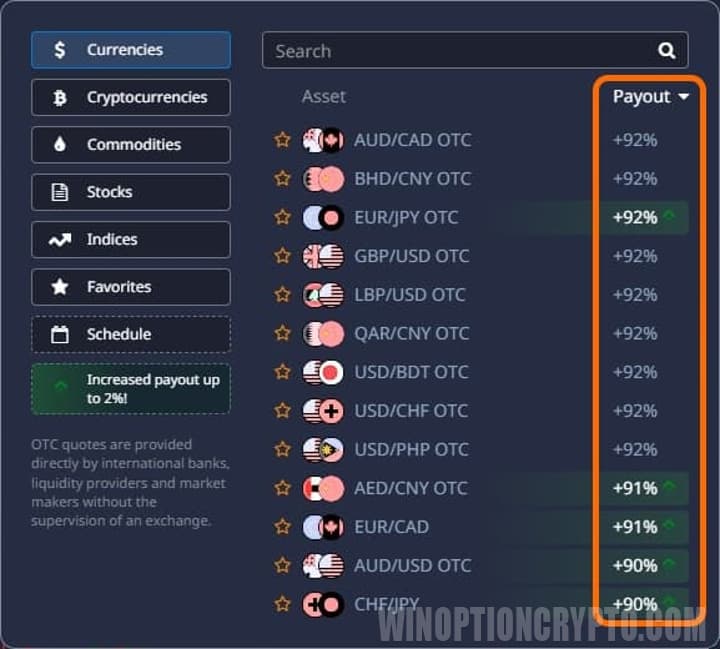
Many beginner traders choose binary options as their starting point, and for good reason. Their defining characteristic is high per-trade profitability. In just 30 or 60 seconds, you can receive a payout of 80–98% of the invested capital — a return that would take the Forex market a considerable period to achieve.
Over a year of conservative trading, a trader can grow their deposit by 30–50% depending on the risks taken, strategy used, and level of experience. A simple calculation illustrates the potential in the binary options market:
With a deposit of $1,000, a payout of 82% per option, and a risk of 2% per trade, a losing trade costs $20 (1,000 × 0.02), while a winning trade returns $16.40 ($20 × 0.82). If you place 100 trades in a month with 60 winners and 40 losers, your monthly profit would be: 60 × $16.40 − 40 × $20 = $184, or 18.4% of your $1,000 deposit.
Long-Term Earnings Prospects
Over the long term, deposit growth depends on your approach to capital management. Here is how earning prospects typically evolve:
- Traders who are not focused on long-term sustainability and want to grow their deposit quickly tend to use aggressive capital management methods — which carries a significant risk of total loss.
- After two or more years, traders typically shift toward more conservative strategies, focusing on stable capital growth.
- After five years of trading, most experienced traders reduce their risk exposure, aiming to grow profits not by increasing trade size but by leveraging the power of compound interest.
The key to long-term success is reinvesting profits: rather than withdrawing earnings, they are kept in the account and used to fund further trades. This approach increases trade volume over time and, consequently, potential profit.
In practice, there are three main scenarios for account development:
The aggressive scenario aims for high returns but carries a significant risk of capital loss. The moderate scenario balances returns and risk. The conservative scenario delivers stable, if modest, income with minimal risk.
The right scenario depends entirely on the individual trader's profile: their experience, financial goals, and risk tolerance.
Specifics of Cryptocurrency Trading
Cryptocurrencies are unique digital assets that are attracting a growing number of traders around the world. Many have heard of Bitcoin and Ethereum, but these are far from the only instruments available for trading. The defining features of cryptocurrencies are the ability to trade around the clock, a decentralized structure, and the absence of a single regulatory authority. This means they are not controlled by any central organization, and the influence of global financial institutions and regulators on the cryptocurrency market is limited.
This is precisely why cryptocurrencies are so volatile. Their value can change so rapidly that within a single trading day an investor may significantly increase — or completely lose — their capital. Unlike traditional financial markets, the cryptocurrency market operates 24 hours a day, seven days a week, allowing trading even while the world's major stock exchanges are closed.
On one hand, this gives traders additional opportunities to profit and improves the overall accessibility of the market. On the other hand, high volatility creates unpredictable price swings and additional risk. There is also the risk of price manipulation: due to limited regulatory oversight, large players can coordinate to create artificial momentum and profit from the resulting price movements.
It is also advisable to avoid investing in little-known cryptocurrencies, as fraudulent projects are common — their sole purpose is to take money from inexperienced investors. Always keep in mind the risks associated with hacking cryptocurrency exchanges and other internet-connected ("hot") wallets. For secure storage, use dedicated hardware wallets without a permanent internet connection. You can learn more about the rules for storing cryptocurrency in our article "Where and How to Store Crypto".
Path to the Profession
If you are interested in trading, you are probably wondering how to get started. There are several routes. The first and most accessible is self-study — working through theory, reading books, watching educational videos, and practicing on a demo account. This path requires discipline and a significant time investment.
An alternative is to pursue a formal higher education in economics or finance, which provides the foundational knowledge required for the profession. In addition to a degree, you can gain the necessary skills through specialized courses offered by many brokerage companies. These courses typically cover financial literacy, technical analysis, capital management principles, and core trading strategies.
Risk Management and Typical Mistakes
New traders often focus too much on trading rules and the potential profits a given system might generate. In practice, however, learning to apply risk management is far more important. Losses will not disappear once you start using it, but the drawdowns on your account will decrease significantly.

Capital management is not simply a set of rules — it is a holistic framework that helps a trader preserve and grow their capital over time. Remember that you should never risk more than you can afford to lose. Set a comfortable risk level for each individual trade and for the trading session as a whole, then stick to it.
The classic investor's maxim — don't put all your eggs in one basket — is as relevant as ever. Spread your capital across different assets so that gains on some positions can offset potential losses on others. If you trade Forex or on a cryptocurrency exchange, always use a stop loss. If you prefer binary options, do not risk more than 2–3% of your deposit on any single trade.
Always control your emotions and trade according to a plan. With sound capital management and consistent discipline, you will be able to grow your account and your per-trade profitability over time.
Despite all the guidance available, novice traders continue to make the same typical mistakes:
- Trading without a plan.
- Taking excessive risk on individual trades.
- Reacting emotionally to trading results.
- Abandoning the rules of their trading strategy and opening trades without a system, relying on luck.
- Having a poor understanding of basic market concepts and being unable to analyze the market properly, leading to consistent losses.
Conclusion
The trading profession is appealing for its income potential. The career development opportunities and professional growth it offers are accessible to anyone who strives for financial independence. However, this path is challenging and requires navigating the landscape of one's own ambitions, fears, and impulses.
A trader at the start of their journey stands at a crossroads: "Go straight, and you may find success; go right, and you'll protect your capital; go left, and you might become the next Warren Buffett." That is, of course, a joke. But in financial markets, both outcomes are genuinely possible — great wealth and total loss alike.
This is why training and risk management education are essential. Trading is not a game — it is serious work. Success belongs only to those who are willing to put in the time, learn from their mistakes, and continuously improve.
Frequently Asked Questions (FAQ)
Is It Possible to Make Money from Trading?
Yes — it is possible, but it is not easy. Earning money through trading should be treated not as a lottery, but as intellectual work that requires knowledge, experience, and discipline. You need to master the art of market analysis, learn to manage risk, and control your emotions. Only then can trading become a source of relatively stable income.
Who Is the Richest Trader?
There is no definitive answer, as rankings and reported results are constantly changing. However, the most recognized names associated with extraordinary trading wealth include George Soros, Jim Simons, and Ray Dalio. It is important to note, though, that wealth is not the only measure of success — many traders who avoid the spotlight achieve outstanding results while remaining largely unknown.
How Much Does a Trader Earn?
A trader's income is a flexible concept. It depends on the country, experience, qualifications, employer, and — above all — the success of their trades. Beginner traders can expect a base salary that grows in proportion to their skills over time. Experienced traders often receive a share of profits, which can multiply their earnings significantly.
How Many Trades Does a Trader Make per Day?
The number of trades per day varies depending on trading style. A scalper may execute several hundred trades in a session; a long-term position trader may hold a position for weeks and make only a handful of trades per month. Everything depends on the strategy, asset, and market conditions at any given time.
How to Become a Trader from Scratch?
It is challenging, but entirely achievable. Start by studying the fundamentals of technical and fundamental analysis, and familiarize yourself with the principles of risk management and capital management. Then develop a trading strategy and practice executing trades on a demo account. Once you are generating consistent results, you can move on to a live account.

To leave a comment, you must register or log in to your account.