
If you ask ten people what binary options trading is like, nine out of ten will say it's like a casino. Instead of betting on "red" or "black," you bet "up" or "down" — pure luck. Sound familiar? Trade after trade, a brief adrenaline rush, then a drained account and the uncomfortable feeling that "something went wrong."
If you've ever found yourself thinking this, you're not alone. Most binary options beginners go through exactly this. It's why so many of them eventually lose their deposits and leave the market, convinced that consistent profits are impossible. But there is another group — the remaining 10% of traders — who don't just "get lucky sometimes," but earn consistently, month after month.

They have no secret button and no magic indicator from an exclusive private channel. The difference comes down to habits — the same daily actions, practised until they become second nature.
This article is not about a "miracle strategy" or a "holy grail" indicator that solves everything overnight. It's about something far more valuable: the seven key habits that distinguish professional traders from amateurs. If you're ready to stop relying on luck and take genuine control of your trading results, read on.
Contents:
- Binary options trading is a system, not a casino
- Habit #1: Discipline
- Habit #2: Knowing when to stop
- Habit #3: Market analysis, not guesswork
- Habit #4: Cold calculation
- Habit #5: Continuous learning
- Habit #6: Managing fear and greed
- Habit #7: Keeping and analysing a trading journal
- Conclusion
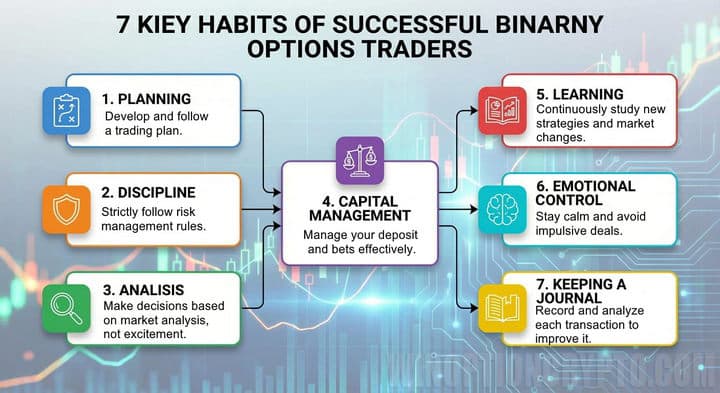
Binary Options Trading Is a System, Not a Casino
For most beginners, a binary options broker's trading platform quickly begins to feel like a roulette wheel. The green "Up" button replaces "red" and the red "Down" button replaces "black." A couple of minutes of anxious waiting — and any hope of a lucky outcome evaporates.
Does this sound familiar? This is how the vast majority of traders operate: decisions made impulsively and emotionally, trades opened on instinct, outcomes determined by luck rather than analysis. The deposit dwindles, frustration mounts. And this is not surprising — the casino always wins in the long run, and the market, approached this way, is no different.
Now consider the other side.
Systematic trading is the opposite of this chaos. There is no room for gambling, guesswork, or random entries. Instead, what was once a game of chance becomes a profession — and it all begins with a trading plan and the right mindset.
A professional never sits down at a terminal wondering, "So, where might the price go today?" They enter the market with a clear plan. Everything is mapped out in advance:
- when to enter a trade,
- which expiration to use,
- what hours to trade,
- which assets to trade,
- and which to avoid.
Trading without a plan is like setting out to sea without a map or compass. You can sail for a long time, but the chances of reaching your destination are slim. Every decision within your trading system should be grounded in your own analysis and backtesting — not in "I feel the market is going up right now." Use established technical tools instead.
 The first is technical analysis: charts, support and resistance levels, candlestick patterns, and indicators. A professional does not guess — they see the trading signal forming and act strictly according to their rules.
The second tool is fundamental analysis. Before entering a trade, an experienced trader always checks the economic calendar for major news events that could cause unpredictable market moves. In those situations, waiting is wiser than trading.
Even the most thorough analysis cannot guarantee a 100% win rate. Losses have always existed and always will — that is a normal part of trading. A professional's primary goal is therefore not to "hit the jackpot," but to survive in the market over the long term.
This is where risk and capital management become essential. A simple but firm rule: never risk more than 1–3% of your account on a single trade. Set a daily loss limit in advance — and when you reach it, close the platform. No attempts to "win it back," no proving anything to the market.
This approach removes emotional pressure. Each trade stops being a make-or-break moment and becomes a routine business operation — one that cannot destroy your account on its own.
This is the fundamental difference between a gambler and a trader. In a casino, the mathematical expectation always works against you. In systematic trading, you create a positive expectation yourself. When your strategy has an edge, profit over hundreds of trades becomes less a matter of luck and more a consequence of discipline.
The goal is straightforward: stop gambling and start managing capital. A good manager does not rely on luck. They follow a plan, manage risk, and make decisions based on objective data — not emotion. This is where stable trading begins.
Habit #1: Discipline

Discipline is the most important component of successful trading — and of any serious endeavour. It is the ability to follow your own rules precisely in those moments when emotion says, "Go for it! This one's a sure thing!" It is the internal mechanism that allows you to decline a trade, even when it looks incredibly tempting.
Without discipline, nothing else works. The most accurate strategy, the most sophisticated indicator, and the most carefully constructed trading plan all become worthless theory if you break the rules at the critical moment. Discipline is what converts knowledge into results — the bridge between a trading plan and actual profit.
Many traders believe their main enemy is the market. In reality, the enemy is always closer: it is you yourself — or more specifically, fear, greed, and the urge to chase losses. Fear causes traders to avoid entering trades where they should, missing profitable opportunities. Greed pushes them into positions that are too large, risking far more than planned. The urge to recover losses leads to impulsive trades that only compound the damage.
A disciplined trader understands all of this. When trading, they do not rely on gut feelings, emotions, or inner impulses. Their only authority is their trading strategy — a pre-defined plan, free from market pressure and adrenaline.
The good news is that discipline is not an innate trait. It can be built through consistent practice.
Start simply. Create a checklist of three or four conditions that must all be present before entering a trade: a strategy signal, trend confirmation, acceptable risk, and an appropriate trading window. If even one condition is absent, skip the trade — no exceptions.
Set a strict daily loss limit — for example, 3% of your account. Once reached, trading stops for the day. No "one more trade," no "I'm almost back to even." This rule protects both your capital and your composure.
The formula is simple: strategy tells you what to do, and discipline makes you do it. That is what transforms trading from an emotional exercise into a manageable, consistent business.
Habit #2: Knowing When to Stop
In conventional trading, losses can grow almost without limit. Binary options initially appear safer: you only ever risk a fixed stake. If you bet $10, you cannot lose $11. Problem solved — or so it seems. This is precisely where the most dangerous trap lies, the one that catches 9 out of 10 beginners. The risk is not the loss itself, but what you do immediately afterwards. 
Here is a familiar scenario. Your $10 trade closes out of the money. Frustration sets in immediately, and your mind offers what seems like a logical solution: "I need to recover that immediately — if I bet $20 and win, I'll be back in profit." Without waiting for a clear strategy signal, you open a new, doubled trade. This is how most traders stumble into the Martingale trap. If the second trade also loses, you bet $40, then $80. Four or five consecutive losses, and the account is gone.
A professional views a losing trade very differently. A $10 loss is not a personal defeat — it is a planned cost of testing a trading idea, a business expense like any other. The trade is closed, the result recorded. There is no attempt to "win back." They wait calmly for the next signal that fully meets their system's criteria and enter with their standard stake — not a doubled one. Their goal is not to win every single trade, but to produce a positive result across 50 to 100 trades.
To develop this habit, first establish your standard stake in advance. The key rule: it should not exceed 1–3% of your account. With a $500 balance, each trade should be between $5 and $15 — not a cent more. Second, and just as importantly, set a daily loss limit for the entire session — either a cap on consecutive losing trades ("after three losses, I close the platform until tomorrow") or a maximum daily drawdown ("once my balance drops 6%, trading is over for the day").
This is what it truly means to know when to stop — not just on a single trade, but across an entire losing streak — preserving capital to return on a better day.
Habit #3: Market Analysis, Not Guesswork

Before pressing a button, ask yourself: "Why do I think the price will go up or down right now?" If the answer is "I just feel like it" or "The price has been falling for a long time — it must be due a bounce," stop. At that point, you are not trading — you are guessing, flipping an invisible coin. In the long run, that approach always leads to losses.
Guessing means predicting the future based on intuition, emotion, or random reasoning. The odds start at 50/50, but psychological pressure — causing you to make errors — quickly brings them down to around 40%. That is a reliable path to depleting your account.
Market analysis is the opposite. It allows traders to shift the probability of a profitable outcome in their favour. You do not need to be right 100% of the time — a win rate of 60–70% is sufficient to generate consistent income.
Market analysis broadly divides into two parts. The first, and most relevant for binary options traders, is technical analysis. Understanding the language of a price chart means seeing patterns in price behaviour rather than a random sequence of lines. This enables you to identify support and resistance levels where price may reverse, recognise candlestick patterns such as hammers and doji candles, and use technical indicators — such as moving averages or the RSI — to identify the prevailing trend and overbought or oversold conditions.
The second part is fundamental analysis. For short-term binary options trading, this does not mean forecasting the long-term impact of GDP figures on a currency. The practical goal is simpler: knowing when not to trade. Opening the economic calendar and seeing that US Non-Farm Payrolls are due in ten minutes tells you the market is about to become unpredictable. Staying out is the correct response.
The purpose of market analysis is not to predict the future with certainty, but to gather objective evidence pointing towards the most probable price direction — evidence drawn from candlestick patterns, levels, and indicator readings. The guessing trader is driven by fear and greed. The analytical trader acts on facts.
Tip: Create a simple checklist of 3–4 conditions for your strategy. Before each trade, check every item — if even one is missing, skip the trade. This straightforward ritual trains your brain to engage analysis rather than intuition.
Habit #4: Cold Calculation
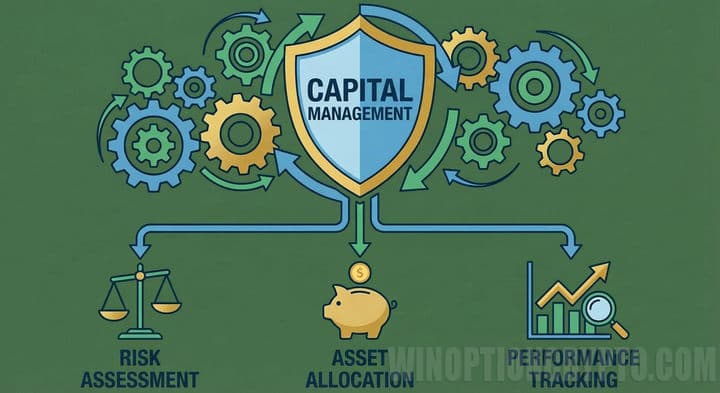
Think of your trading goal as a cross-country journey, not a single sprint. Your strategy is the engine; your account balance is the fuel. A novice sees the green light — a trade signal — and floors it, burning through a quarter of the tank in one go. It may look impressive and produce a couple of wins. But very soon they will be stranded by the roadside with an empty tank, nowhere near their destination.
The experienced driver thinks differently. The journey is long and fuel is finite. They do not try to break records on every straight. Their goal is to reach the destination — consistent profit — which means steady driving on a predetermined route. They know there will be red lights (losing trades) and traffic along the way. What matters is always having fuel left — cash in the account — to keep going.
This is where one of trading's foundational principles applies: capital management. The logic is straightforward. If you lose half your fuel, you need to double what remains just to get back to where you started. This simple maths explains why traders who risk 10–20% of their capital on a single trade almost always stall before they ever get going.
Those who follow the 1–3% rule give themselves the room to be wrong — their tank is still nearly full, with thousands of miles of opportunity still ahead. For a deeper understanding of capital management principles, we recommend this collection of articles:
- Capital management — money management principles
- How to keep losses under control — risk management
- Psychology and trading discipline
- The trader's journal as a tool for refining trading strategies
Tip: At the start of each trading day, calculate 1–2% of your account balance and set this as your default trade size on the platform. Do not change it during the session — however tempting it may be to "win back" or "double up." This is the simplest and most effective protection against emotional decision-making.
Habit #5: Continuous Learning

Suppose it is 2016 and you have found what appears to be the perfect trading system. Trades close in profit consistently, your account grows, and your confidence is high. At some point you decide you have found the "Holy Grail" and stop learning altogether — why bother, when everything is working? Fast-forward to the present. The chances are that this "perfect" strategy stopped working long ago. Why? Because you were navigating with a ten-year-old map in a world that has fundamentally changed.
For a trader, ceasing to develop almost always marks the beginning of the end. The market is a living, constantly evolving organism. It adapts to the behaviour of its participants. When a strategy or pattern becomes too widely used, large players begin exploiting it against the crowd — and what was once profitable turns into a trap for those who have not adapted.
The market is changing in several dimensions simultaneously:
- Technology — high-frequency algorithms and trading bots are altering the micro-dynamics of price movement, making it sharper and less predictable than before.
- Psychology — the crowd learns too, and what once triggered strong emotional reactions and sharp price swings now passes almost unnoticed.
- Regulation — new rules and restrictions can completely reshape the conditions for entire markets or individual assets within a matter of months.
- Global events — financial crises, pandemics, and geopolitical developments create new market realities in which older approaches become less effective.
A trader who stops learning will inevitably fall behind. But what does "learning" actually mean in trading? It is not simply watching tutorials or reading books. Learning in trading consists of three key activities:
- Self-analysis. Your most valuable textbook is not a course or a mentor — it is your trading journal. Not just a spreadsheet of results, but a detailed log of what you did and why. Honest, regular self-analysis is the fastest path to trading progress.
- Market monitoring. Continually observe the behaviour of the assets you trade. Are familiar patterns still performing as well as they were six months ago? Has the instrument become noisier or more trending? Are new formations emerging that outperform your established patterns?
- Expanding your toolkit. Do not jump between strategies. Instead, deliberately and gradually build your repertoire of trading methods. When you identify an interesting new indicator or approach, test it on a demo account first. The broader your toolkit, the easier it becomes to adapt to different market phases.
Continuous learning frees you from chasing a "magic button" and equips you to earn across varying market conditions. If you are just starting out, our course "Binary Options: Step-by-Step Trading Training from Scratch" is an ideal starting point.
Habit #6: Managing Fear and Greed
If binary options trading were a purely mathematical exercise, anyone who could count would already be wealthy. But that is not the case. The reason 90% of traders lose money is that, at the moment of deciding to open a trade, two powerful forces — fear and greed — intervene between rational thought and the Up/Down buttons.
Fear is the internal voice of panic, pushing you towards irrational hesitation. You see a perfect signal, but something asks, "What if this doesn't work right now?" While you hesitate, the opportunity passes. Fear also manifests as FOMO — the fear of missing out. You see the price surging and buy a Call option in a panic, just before the market reverses against you. 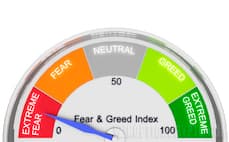
Greed is an equally dangerous influence. It typically emerges after a run of successful trades, when a trader begins to feel invincible. Riding a wave of confidence, they trade increasingly aggressively — ignoring their own rules, entering questionable trades, and quickly giving back a large portion of their gains. Greed also drives the urge to "recover losses" by doubling stakes and entering without a clear signal.
These forces are powerful, and not everyone can overcome them — as the statistics on trader profitability make clear. The most reliable defence is to become a disciplined executor, following strategy and risk management rules with mechanical consistency.
One practical approach: divide yourself into two roles — the "analyst," who develops the trading strategy, and the "executor," who implements trades strictly according to the system. When pressing buttons in the terminal, the executor's job is simply to follow the plan — suppressing emotion and denying fear and greed any influence over the decision.
Habit #7: Keeping and Analysing a Trading Journal
After any aviation accident, investigators search for the flight recorder — the "black box" that captures instrument readings, communications, and every action taken by the crew. This data is invaluable: it reveals the causes of the accident and helps prevent similar events in the future. Apply the same thinking to your trading. Where is your "black box"? What is stopping you from repeating the same mistakes again and again? 
A trading journal is that black box. It is not merely a record of results — it is a tool for converting poor outcomes into valuable understanding. For it to be genuinely useful, each entry should include: date, asset, trade direction, and outcome. Crucially, it should also include a chart screenshot at the moment of entry and an honest description of the reason for the trade — for example, "bounce off a support level" — as well as your emotional state at the time: "confident," "trading out of boredom," or "trying to recover losses."
At the end of each week, reviewing your entries and screenshots objectively will reveal patterns: signals that were ignored, entries made too early, or a strategy that works in the morning but consistently loses in the evening. This kind of analysis provides a clear, evidence-based view of your trading system and highlights where losses are coming from.
Keeping a trading journal is the least glamorous but most productive habit you can develop. It is what distinguishes a professional — who builds success on reliable data — from an amateur who simply "tries things" and hopes for the best.
Tip: Every time you open a trade, immediately take a chart screenshot and write one sentence: "I entered this trade because..." This 15-second habit, reviewed weekly, will become your most accurate source of insight into the real reasons behind your wins and losses.
Conclusion
We have covered seven fundamental habits for profitable binary options trading — habits that together form a solid foundation for any serious trading career. From discipline and market analysis to capital management and journaling, they all point towards the same core idea: transforming a game of chance into a systematic, manageable business. None of these habits are innate. Each is a skill built through daily practice.
Do not try to adopt all seven at once. Choose the one that feels most relevant to you right now. Start keeping a trading journal, or commit to a strict 2% risk rule per trade. Focus on that single habit for one to two weeks until it becomes automatic — then gradually add the others.
Success in binary options trading is a marathon, not a sprint. Start building the right foundations today, and the results will follow.

To leave a comment, you must register or log in to your account.