
Short expiration times allow traders to see potential profits much faster, which makes them particularly appealing to beginners. Experienced traders, however, tend to prefer medium- and long-term strategies when trading binary options, as these reduce exposure to short-term price fluctuations and market "noise."
Beginners are often drawn to turbo options on Quotex because they seem more straightforward and require less analysis. Medium-term trades, by contrast, demand more thorough preparation. That said, there is one medium-term strategy that is easy to learn and widely used by experienced traders — and all the indicators it requires are available by default on the Quotex platform.

How the Stochastic Average Strategy Works on Quotex
This strategy uses three indicators:
- Moving Average. The Moving Average appears as a smooth line on the chart and is used primarily to identify the trend direction. When candlesticks are above the SMA line, the trend is bullish (upward); when they are below it, the trend is bearish (downward).
- Bollinger Bands. This indicator consists of three lines and shows both the trend direction and the boundaries of the price range (price channel). In this strategy, it determines the entry point: a trade is opened immediately after the price bounces off the upper or lower band.
- Stochastic Oscillator. A widely used momentum indicator that identifies overbought and oversold conditions. In the Stochastic Average strategy, it provides additional confirmation of the signal generated by Bollinger Bands.
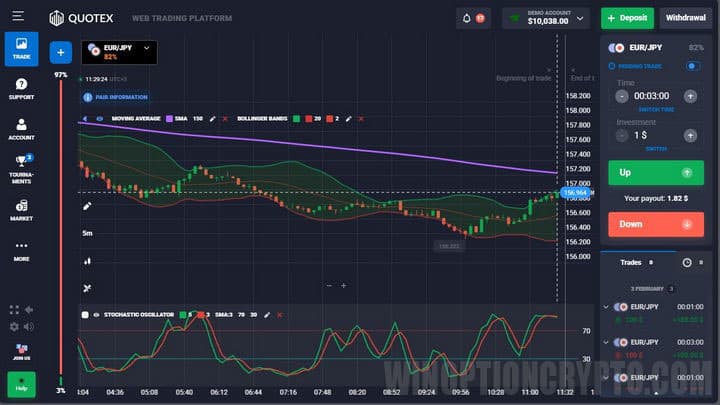
Installing and Configuring the Indicators in Quotex
Add the following indicators to the chart with the settings listed below:
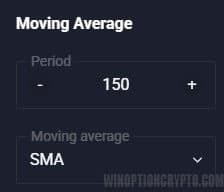
- Simple Moving Average: period "150":
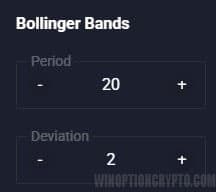
- Bollinger Bands: period "20", deviation "2":
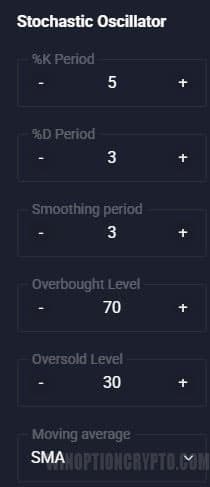
- Stochastic Oscillator: %K period – "5", %D period – "3", deviation – "3", levels – "70" and "30", method – SMA:
The recommended timeframe is H1, chart type "Japanese candlesticks," expiration 4 candles.
Trading Rules for the Stochastic Average Strategy on Quotex
The strategy follows three straightforward rules.
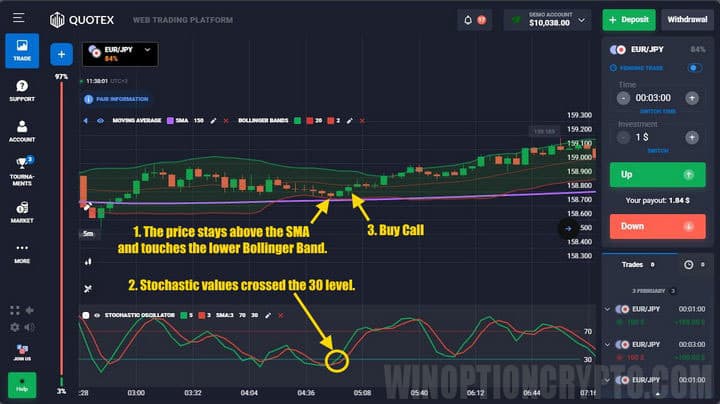
Open a Call option when the price bounces off the lower Bollinger Band, the Moving Average confirms a bullish trend (the SMA line is below the candles), and the Stochastic signal line has exited the oversold zone (i.e., is above level 30):
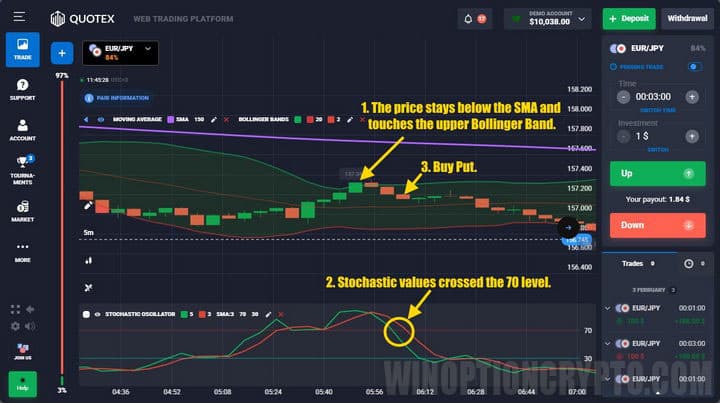
Open a Put option in the opposite situation: during a downtrend confirmed by the SMA, with the Stochastic Oscillator line having exited the overbought zone (i.e., below level 70), and the price rebounding from the upper Bollinger Band:
The expiration for each trade should be at least 2 hours; 4 hours (4 candles on the H1 chart) is recommended.
Also, remember that you can reduce your trading risk by using the Quotex cancel loss trade promo code, which allows you to cancel any losing trade up to $10.
Recommendations for Using This Strategy
For best results with the Stochastic Average strategy on Quotex, choose assets with high volatility and strong trading activity. Avoid opening trades during flat (sideways) market conditions, when no clear price direction is established.
Pay close attention to the Stochastic Oscillator line and only open a position once it has clearly exited the overbought or oversold zone — not while it is merely approaching the threshold.
Can't figure out how this strategy or indicator works? Leave a comment below and subscribe to our YouTube channel WinOptionCrypto, where we cover all your questions in our videos.
Find the best bonuses, promo codes, and contests for Quotex on our social media: Telegram Group | Facebook Group.
See Also:
- How to Open an Account with Quotex
- How to Verify Your Quotex Account
- Quotex Broker Affiliate Program
To leave a comment, you must register or log in to your account.