
Binary options have long been a popular way to earn money online. It is no surprise, then, that new binary options brokers continue to enter the market every year. But how exactly do they make money — and where does their profit come from when you are the one trading?
To understand this, it helps to start with the basics. Who is a broker and who is a trader? How do they differ? And what is a binary option, precisely?

Beyond these standard questions, many newcomers also want to know: how transparent is the binary options market? Is it genuinely possible to make money here, or does it inevitably end in losses?
To clarify the picture, let's examine what binary options brokers earn money on. Understanding this will help you see what the binary options market is built on — and what position you can realistically occupy within it. This knowledge is especially valuable if you are aiming to build a consistent income from binary options.
Contents:
- Who is a binary options broker?
- How do binary options brokers make money?
- What makes an ideal broker?
- Conclusion
Who Is a Binary Options Broker?
Before answering that question, let's establish some key terms:
- A binary option is essentially a prediction on whether the price of an asset will be higher or lower at the end of the contract period (expiration time).
- The trader is you — the user of the broker's trading platform — who makes decisions and executes trades.
- Spread is the difference between the buy and sell price of an asset, and is another potential source of income for a binary options broker.
- Swap is a fee for holding an open position overnight. In standard binary options, however, swaps are generally not applied.
A binary options broker is a company with which you enter into an agreement for access to financial market trading. It acts as an intermediary between you and other market participants. Like any intermediary, a brokerage charges fees for its services — and this is one of its primary revenue streams.
How Binary Options Brokers Make Money

Let's take a closer look at the main ways binary options brokers generate revenue.
Trading and Commission Fees
The primary source of income for binary options brokers is the structural imbalance between client losses on losing trades and payouts on winning ones. Unlike the Forex market, where the broker acts purely as an intermediary, in binary options the broker's profit is built on the fact that the proportion of losing trades across all clients typically exceeds the proportion of winning ones. With a payout of 80% on a win and a 100% loss on a losing trade, even with perfectly even price movement, the broker retains a margin across a large volume of trades. The more clients there are, and the more actively they trade, the greater this margin becomes.
Some brokers also charge fees for non-trading operations — for example, depositing funds via certain payment systems or e-wallets, or changing the currency of a trading account.
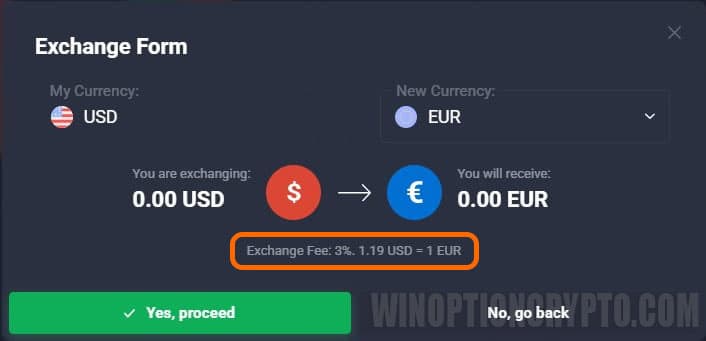
For example, if you opened an account in US dollars and later decided to convert it to euros, the broker may deduct up to 3% of the account balance as a conversion fee.
Account Tiers and Loyalty Programmes
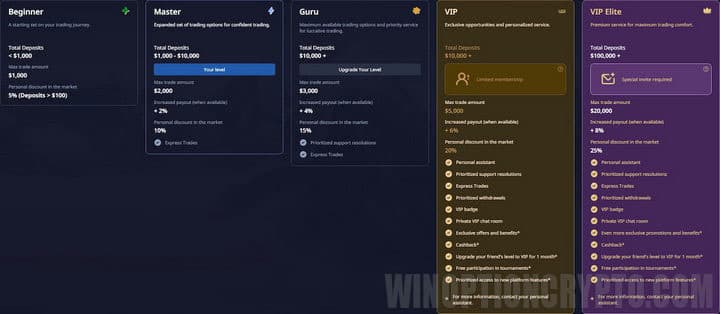
Beyond standard commissions, binary options brokers also earn through loyalty programmes. These typically involve offering clients different account tiers, each with its own set of privileges. VIP accounts, for example, may carry lower commissions on trades and non-trading operations, but require a monthly or annual fee. Additional charges may also apply in the form of inactivity fees, annual maintenance fees, and similar costs.
Premium Subscriptions
Paid subscriptions represent another common revenue stream for binary options brokers. These can range from professional market analytics and trading signals to access to a trading room where experienced traders share their market views and offer guidance to newer clients. Some subscriptions include proprietary technical indicators or trading robots, particularly on platforms that support algorithmic trading.
Gamification
Gamification — the incorporation of game-like elements into the trading experience — has grown significantly in popularity in recent years. Its purpose is to increase user motivation and engagement, making what can be a monotonous and pressured activity more rewarding.
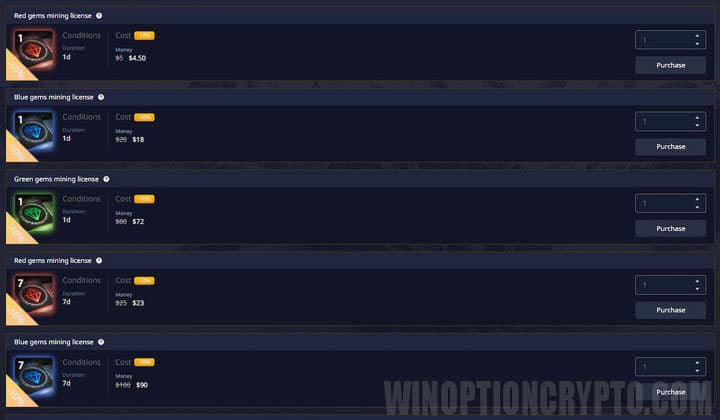
Brokers introduce game mechanics such as tasks and challenges, points earned in the form of crystals or coins, rankings, and achievements. These points can be redeemed for platform advantages — such as enhanced payout rates, cancellation of losing trades, and other benefits.
Most game bonuses are also available for direct purchase in a dedicated marketplace on the platform, turning gamification into an additional revenue source for the broker.
Interest on Idle Client Funds
Some binary options brokers generate additional revenue by putting temporarily idle client funds to work — a model broadly similar to that of commercial banks. While still relatively uncommon, several companies have already implemented this in practice.
The arrangement works as follows: the broker invests client funds and pays interest in return. This level of transparency and alignment with client interests is a mark of a reliable company — quite distinct from operations that treat traders purely as a source of revenue without offering anything meaningful in return.
These arrangements are typically available in both fiat currencies and cryptocurrencies, including Bitcoin and Ethereum, making this a versatile passive income option for traders whose capital is not currently deployed in trades.
Affiliate Programmes
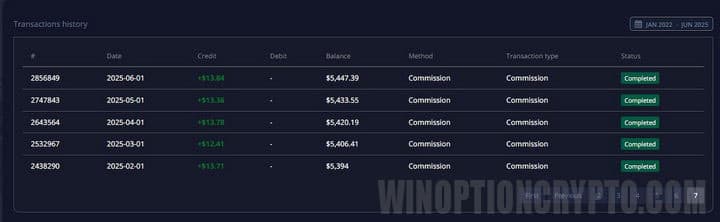
Affiliate programmes are one of the most effective marketing tools available to binary options brokers, enabling companies to attract large numbers of new clients and drive direct revenue growth.
The advantages for the broker are clear:
- Rather than investing in large-scale advertising campaigns, the broker pays partners a fixed fee for each client they refer — enabling effective growth while keeping acquisition costs under control.
- Partners provide access to targeted audiences through their websites, blogs, social media channels, and other traffic sources, simplifying the process of reaching potential clients at lower cost.
- By promoting the broker's services, partners contribute to broader brand awareness and a stronger online reputation.
- The affiliate network generates a continuous, self-sustaining flow of new clients.

An affiliate programme is therefore an efficient and cost-effective tool for scaling a binary options brokerage — attracting new clients, growing revenue, and significantly reducing advertising expenditure.
What Makes an Ideal Broker?
An ideal broker is not simply a platform with a clean interface — it is a genuine trading partner. Rather than prioritising only its own interests, it takes care of its clients: offering transparent terms, reliably protecting their funds, and providing everything needed for a comfortable trading experience.
The hallmarks of a reliable broker include:
- A valid licence from a recognised financial regulator.
- Client funds held in segregated accounts, fully separate from the company's own operating capital.
- Positive reviews and a strong reputation among traders, combined with full transparency about the company and its activities.
- A stable, intuitive trading platform that executes orders without delays and supports a range of option types: Touch, Range, Ladder, pending orders, express options, and others.
- Multi-device availability, a wide range of technical indicators and analytical tools, multiple chart types, support for drawing tools, and the ability to save chart templates.
- A broad asset selection — from currency pairs to cryptocurrencies.
- A variety of expiration times, from a few seconds to several days.
- Competitive payout rates on options.
- A low entry threshold: accessible minimum deposit and minimum trade size.
- A demo account for exploring the platform and testing strategies.
- Multiple deposit and withdrawal methods.
- Multi-language support for clients from different countries.
- Prompt and knowledgeable customer support.
- Educational resources: articles, market analysis, and video tutorials.
How Broker Ratings Can Help You Choose the Right Company
Binary options broker ratings are a valuable tool for any trader. They simplify the process of identifying a reliable company by filtering out questionable platforms and highlighting market leaders.
Researching dozens of brokers independently — reviewing their licences, trading conditions, and user feedback — is a time-consuming task. Ratings consolidate and organise all of this information, making it easy to compare key characteristics across multiple brokers at a glance.
They are typically presented in a tabular format, which makes side-by-side comparison straightforward across criteria such as minimum deposit, payout rates, available assets, and demo account availability.
A well-compiled broker rating is a reliable reference point for any trader looking to choose the right platform.
Conclusion
We have examined how binary options brokers generate revenue: their primary income sources are the structural margin between payouts and client losses on trades, commissions on various operations, and paid services for clients.
Understanding this gives you a clearer basis for evaluating and choosing a trustworthy partner. The binary options broker ratings on our website are a good starting point for that process.
Good luck with your trading!

To leave a comment, you must register or log in to your account.