
At the early stages of working with any financial asset, including binary options, traders often make the same types of mistakes. This is mainly due to a lack of experience. Advice from professionals who share the rules that must be followed can help traders avoid these pitfalls. Without such guidance, learning to trade financial assets successfully becomes far more difficult.

Contents:
- Avoid hasty decisions;
- Take responsibility for your decisions;
- Start trading only with a demo account;
- Do not use universal strategies;
- Bonuses from brokers may result in losses;
- A trading journal is a must-have tool for a successful trader;
- Trading discipline determines success;
- Create a trading plan before you start trading;
- Develop strategies that work for you;
- Only trade with money you can afford to lose;
- Never stop learning;
- Never stop watching charts and price movements;
- Learn the basics of trading step by step;
- Avoid scammers;
- Open trades only after reading the terms of your broker agreement;
- Always verify your account.
Avoid Hasty Decisions
Beginners who have acquired some knowledge often feel the urge to apply it in live trading right away. However, professionals advise against rushing into the markets. The global market will keep running regardless of circumstances — there is no need to hurry. For new traders, the priority should be building a solid knowledge base that supports steady development and helps them identify which direction suits them best. This, among other things, makes it easier to determine which assets are most suitable given their personal qualities and situation.
Experienced traders treat financial markets as their primary source of income. This type of activity always carries significant risk, and without following proper trading rules, losses can quickly wipe out an entire account. This is why beginners should not open trades after learning only the general principles of financial markets. Without a sufficient level of knowledge and practical experience, it is impossible to reach a point where the majority of trades are profitable. A strong foundation is needed — one that allows a trader to develop consistent income from financial asset transactions.
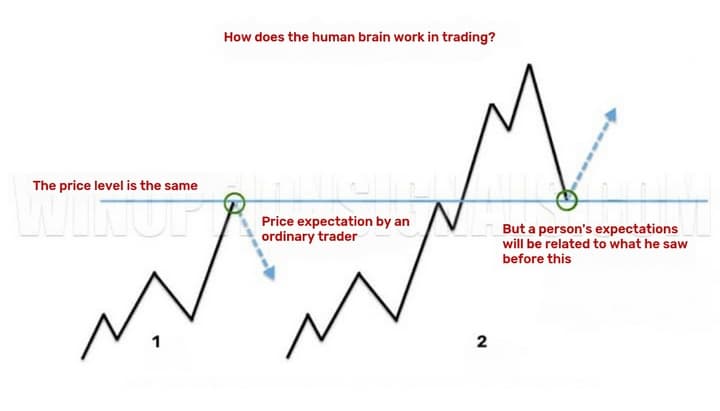
Beginners are advised to dedicate most of their time to acquiring knowledge rather than rushing into live experience. Early trading success depends on this. The breadth of knowledge gained also determines how quickly a person learns to generate profit and how much that profit can grow.
Trading is a full-fledged profession that demands serious study. It can become highly rewarding over time — but success in this field requires a substantial and ongoing time investment. Becoming a professional trader takes years of consistent practice. This means more than reading specialized books. Knowledge is also built through demo account trading, studying strategies, and observing how experienced traders work.
Take Responsibility for Your Decisions
Some binary options brokers offer a trade copying feature. This allows a trader to place orders using the same parameters — amount, asset type, expiration, and so on — as a more experienced trader. This approach can produce solid returns.
However, long-term success in financial markets belongs to those who open positions based on their own analysis. It is essential to understand that each decision is ultimately the trader's own responsibility. Even when copying trades, the person must accept that any losses come out of their own funds. Every order you open is your decision — own it.
The same principle applies to trading signals. The companies that develop them share their view of where the market may be headed, based on their own analysis. But it is the trader who decides whether to act on those signals. The same logic applies to PAMM accounts, managed accounts, and other instruments offered by brokers.
Without making independent decisions, traders are essentially handing their money to third parties and relying on luck. By taking calculated risks, a trader gains knowledge and builds experience — which reduces mistakes over time and ultimately increases earnings.
Start Trading Only with a Demo Account
A demo account is a free tool available from most brokers that helps newcomers understand how trading works. That said, it is most useful at the very beginning — and as advice from successful traders shows, relying on a demo account indefinitely can actually be counterproductive.
The reason is that demo trading uses virtual funds — money that does not belong to the user. While a demo account teaches the basics and allows traders to practice on real market rates without financial risk, it also removes one crucial element: the emotional pressure of trading real money. Without that pressure, traders do not develop an awareness of loss, which means they may not carefully evaluate their decisions when switching to a live account.
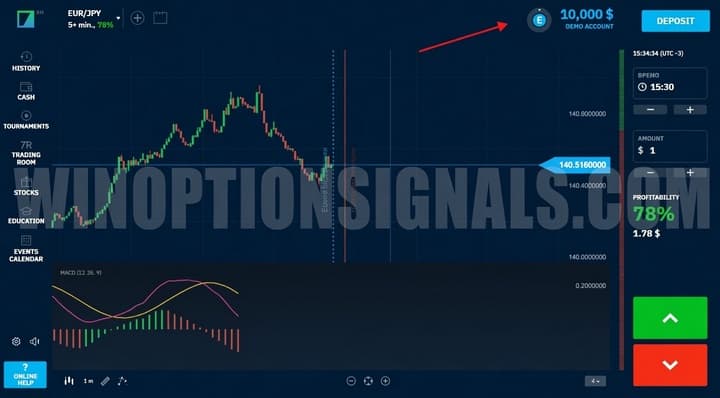
For this reason, demo trading is recommended only as a starting point. Once a trader understands how the market works and has tested a strategy, moving to a real account makes sense. At that initial stage, it is advisable to trade with the minimum available position size — this limits losses while experience is still being built.
Don't Use Universal Strategies
Some traders believe in the existence of a so-called "Holy Grail" of trading — a universal strategy that generates profit 100% of the time. Because of this belief, certain users stick to one or two methods regardless of current market conditions. Others spend years searching for the perfect combination of indicators and analytical tools that will consistently deliver profits.
However, every piece of experienced trader advice makes the same point: there is no universal strategy that works across all market conditions at all times. In reality, price direction can only be forecasted using the tools and experience available — and no approach can predict price movement with absolute certainty.
A strategy that produces a positive result in 70% of cases is generally considered strong. It would be difficult to find anything more consistently reliable.
When starting to trade with real money, avoid the temptation of offers promising to multiply your capital several hundred percent in a short time. Returns like that simply cannot be achieved sustainably.
Bonuses from Brokers Can Lead to Losses
Many brokers offer a variety of bonuses to attract new clients and retain existing ones.
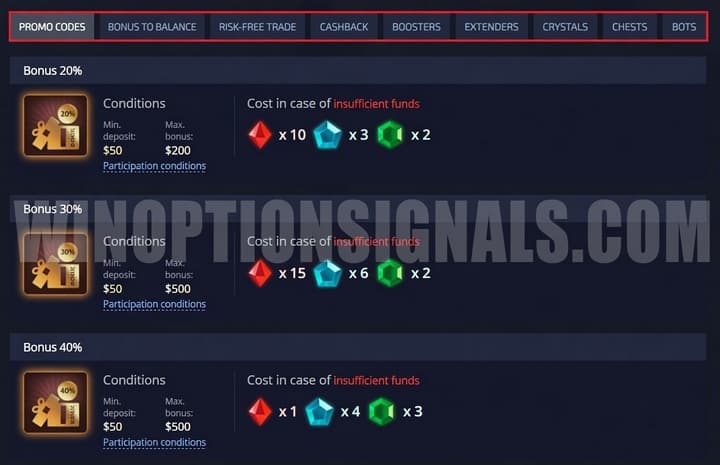
Before accepting any bonus offer, it is essential to read the terms and conditions carefully. Most brokers offer what is known as a welcome bonus, which credits a certain amount to the trader's account upon making a deposit.
This type of bonus is relatively straightforward. The client receives additional funds to trade with. If a withdrawal is requested before the bonus wagering requirement has been met, the bonus is forfeited — meaning those funds cannot be transferred to an external account.
Some brokers, however, go further by locking the entire account balance until specific conditions are fulfilled. In such cases, the trader cannot withdraw any funds at all. These conditions typically require a certain trading turnover, which can be 35–50 times the bonus amount or more. For example, a $100 bonus may require $5,000 in total trade volume. For beginners especially, the likelihood of losing all deposited funds under these conditions is high.
A Trading Journal Is a Must-Have Tool for a Successful Trader
A trading journal is an essential tool for analyzing your own performance. It is where you can quickly identify at what point a chosen strategy started producing losses.
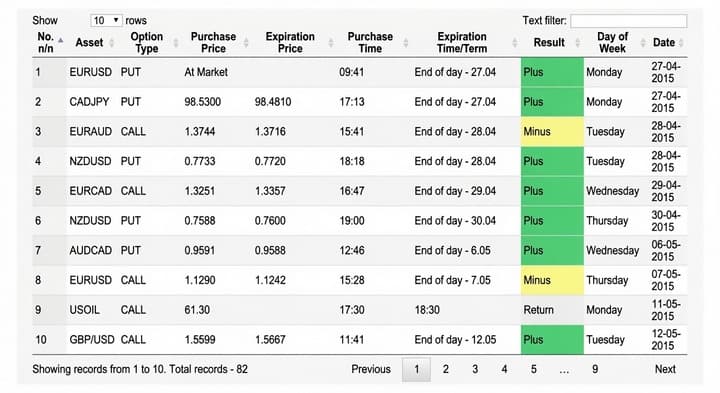
A journal also helps you identify the optimal trading sessions during which your strategy consistently performs well, the most profitable asset types, and other useful patterns. By reviewing your records regularly, you can understand what adjustments to make in order to increase profits or reduce losses.
Some traders also use the trading journal as a trading diary — recording their emotional state during specific trades or market conditions. This helps traders recognize when and what emotions arise, creating an opportunity to work on psychological discipline. Emotions are one of the biggest obstacles to sound trading decisions.
Trading Discipline Determines Success
Trading discipline means executing a predetermined set of rules consistently. For example, if a trader has decided not to open trades before 9 AM, they stick to that rule even when a seemingly favorable setup appears — regardless of any reason to make an exception.
This approach helps minimize losses over time and capture opportunities where they genuinely exist. To avoid costly mistakes, a disciplined trader should:
- strictly follow the rules of the chosen strategy;
- stop trading after several consecutive losing trades;
- apply risk management principles (invest no more than a fixed percentage per trade);
- follow the daily trading plan;
- work to reduce the influence of emotions on trading decisions;
- continuously strive to improve results.
Consistent earnings in financial markets are not possible without a disciplined approach.
Create a Trading Plan Before You Start Trading
A trading plan protects a trader from unexpected risks. It should be drafted before opening the first trade. The plan should include:
- trading hours;
- the strategy being used;
- minimum and maximum investment per trade;
- a clear course of action when trades result in losses;
- daily profit targets;
- maximum acceptable daily loss.
Sticking to such a plan helps avoid many common mistakes and reinforces the discipline that, as discussed above, is key to long-term profitability.
Develop Strategies That Work for You
Only trade using strategies whose logic you fully understand. This requires studying the indicators involved and regularly verifying that the strategy's signals perform as expected.
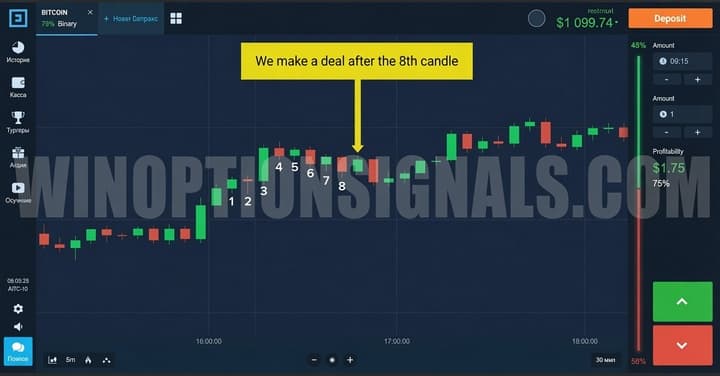
If a strategy is not working or doesn't feel right, consider the following adjustments:
- remove or replace an indicator or oscillator;
- change the timeframe on which trades are opened;
- adjust the conditions for entering trades.
Every strategy should fit the individual trader's character and style. Some traders do better with long-term approaches, others with short-term ones; some prefer higher risk, others lower. It is important to choose a strategy that suits you personally. Do not try to force yourself to adapt to a methodology just because it works for someone else — even if it produces positive results 70% of the time for that person.
Only Trade with Money You Can Afford to Lose
Trading is a high-risk activity. The possibility of losing your entire capital never disappears. Trading cannot solve financial problems — it should not be approached as a way to repay loans or clear debts.
All experienced traders open positions only for amounts they are genuinely prepared to lose. This removes the fear that clouds judgment before placing a trade and allows full focus on the trading process itself. It also makes it easier to apply a strategy that preserves capital during losing streaks, known as drawdowns.
Market professionals generally advise against starting with the absolute minimum deposit. With too small a balance, it becomes impossible to apply proper risk management. A starting capital of $50–$100 is more realistic, with individual trade sizes kept to $0.5–$1. At this scale, occasional losses will not wipe out the entire account.
Never Stop Learning
Learning to trade is an ongoing process. Professionals are constantly discovering new approaches, studying different techniques, and engaging in activities that expand their knowledge. This continuous learning is what allows them to reduce errors over time.
Trading books remain an important source of insight. Experienced traders often read works published decades ago — and for good reason. Despite the transformation and digitalization of global markets, the underlying principles of trading have changed very little.
That said, all information must be filtered critically. Online and elsewhere, it is easy to find commentary from people who claim extensive market expertise but have, in reality, never executed a consistently profitable strategy. Always verify any information by testing it on a chart before risking real money.
Among such self-proclaimed "gurus," the Martingale method is frequently promoted as a way to profit even in declining or unstable markets. In practice, this method leads to losses.
Never Stop Watching Charts and Price Movements
Understanding technical analysis is essential for anyone looking to make money in the financial markets. The tools it provides help identify the direction of price movement over a given time period. According to experienced professionals, mastering technical analysis requires spending at least 10,000 hours studying charts.
Over that time, the brain absorbs all the necessary patterns and context. As a result, a trader learns to intuitively recognize signals on the chart that indicate potential market entry points.
Learn the Basics of Trading Step by Step
There is an enormous amount of information available about trading financial markets today. Trying to absorb it all at once can lead to confusion about terminology, principles, and methodology. The right approach is to take things gradually. Start with the basics of trading, then move on to:
- risk management;
- trading psychology and discipline;
- technical analysis (chart analysis);
- fundamental analysis;
- trading techniques.
Complete each stage only after thoroughly mastering the previous one.
Avoid Scammers
Because trading attracts widespread interest, financial markets are also home to many scammers. These may be companies operating under the guise of legitimate brokers, or individuals selling supposedly universal and foolproof strategies.
To protect yourself, follow these rules:
- only work with a broker that has been operating for more than a year;
- do not buy strategies that claim to be profitable 100% of the time;
- do not purchase programs or indicators that promise to automate trading;
- never give access to your personal trading account to a third party;
- do not trade using the Martingale method.
Beyond these rules, the best protection is careful thinking. Evaluate every action and assess all risks before committing.
Open Trades Only After Reading the Terms of Your Broker Agreement
A brokerage user agreement often contains terms that can restrict your trading activity. This may include prohibitions on using multiple terminals simultaneously, third-party software, trading robots, or the Martingale system (in some cases), among other restrictions.
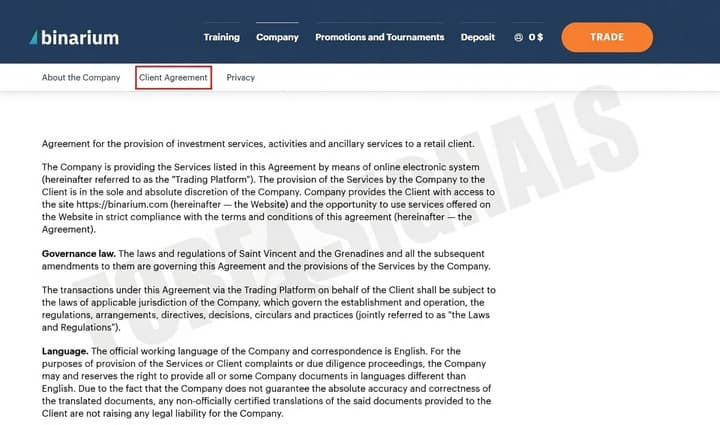
Violating these terms can result in account suspension, which prevents the withdrawal of funds.
Always Verify Your Account
Account verification confirms the identity of the trader and is a mandatory requirement at many binary options brokers. To complete verification, brokers may request a government-issued ID, proof of address, and a photo of the bank card used to fund the account.
To avoid complications later, experienced traders recommend registering your account under your real name from the start.
To leave a comment, you must register or log in to your account.