
The growing popularity of the binary options market continues to attract fraudulent brokers, whose numbers in this segment have been steadily increasing. As a result, traders are increasingly looking beyond their home markets in search of foreign brokers and American binary options, which — owing to the specifics of local legislation — are generally considered more reliable. However, traders often overlook the fact that in a number of countries, current regulations prohibit binary options trading altogether.

Many investors therefore regard American binary options brokers as among the most reliable partners available. In practice, however, difficulties can arise even before any cooperation begins. US legislation directly prohibits trading in binary options of the kind offered by brokers such as Pocket Option, Quotex, Binarium, and others operating in Europe — these brokers are banned in the United States. When trading with these binary options brokers, the trader is not engaging in direct trading in the regulatory sense, but rather placing wagers.
Setting that distinction aside, American brokers and binary options in the US are indeed regarded as among the most reliable in the world. This is largely attributable to the specifics of US legislation, which strictly regulates the activities of such companies.
American Binary Options
As noted above, the activities of standard binary options brokers are prohibited in the United States. However, American binary options — as a specific type of binary contract — are traded on the American market through a limited number of licensed exchange platforms.
Despite their surface similarity to contracts traded in Europe, American binary options have an important distinction. In the European model, digital contracts follow a standard structure: the trader selects a price direction for a chosen asset, sets an expiration date, and locks in a profit amount. American binary options, by contrast, can be closed before the specified expiration time. When this happens, the profit the trader receives on a successful trade is reduced by a few percent.
In addition to binary options in the United States, some European brokers also offer trading in this instrument. These include Pocket Option and Quotex, which offer returns of up to 92%.
Binary Options in the USA
In 2008, the US Senate passed legislation officially recognising digital contracts (binary options) as a financial instrument. This decision led to rapid growth in the sector, increased competition, and prompted many domestic brokers to expand beyond the US market in search of new clients.
 At the same time, the number of fraudulent operators and types of fraud also grew, which prompted the US authorities to ban binary options trading and classify it as a form of gambling. Within just two years, unlicensed brokers lost the ability to facilitate transactions in binary options. There are no exceptions to this rule: companies found to be in violation face substantial fines, and their owners and employees risk imprisonment.
Brokers from other countries that operate freely in Europe also do not serve traders based in the United States. If such companies were to begin working with US citizens, American regulators would have grounds to impose sanctions against them, with potentially severe financial consequences.
Where to Trade Binary Options in the USA
American binary options remain in high demand among traders. Historically, several companies in the United States provided access to these financial instruments through regulated exchanges. The landscape has shifted significantly in recent years, but the underlying regulatory framework — centred on the CFTC — remains in place.
Binary Options Exchange in the USA — NADEX
For many years, NADEX (North American Derivatives Exchange) was the most prominent CFTC-regulated exchange for binary options in the United States, accepting both domestic and international traders. Headquartered in Chicago and regulated by the CFTC, it offered binary options, knock-outs, and call spreads on forex, commodities, and stock indices.
 In December 2025, NADEX retired its standalone platform and transitioned its services to Crypto.com, powered by Crypto.com | Derivatives North America (CDNA) — a CFTC-regulated Designated Contract Market. Trading on Nadex.com was permanently disabled on 20 December 2025. Traders who previously used NADEX can now access equivalent regulated derivatives and prediction market products through the Crypto.com app via CDNA.
CDNA continues to operate under CFTC oversight, preserving the key regulatory protections that made NADEX a trusted venue: segregated client funds, transparent pricing, and defined-risk contract structures.
Binary Options Exchange in the USA — CBOE
CBOE (Chicago Board Options Exchange) has been in operation since 1973 and is one of the world's largest options exchanges. It introduced binary options in 2008 but later discontinued the product. In early 2026, CBOE filed with the SEC to relaunch binary options on regulated US exchanges, positioning the new offering as a compliant alternative to offshore platforms and prediction markets. The relaunch is intended to provide retail traders with transparent, fixed-risk binary contracts under full regulatory oversight. Details of the relaunched product — including eligibility, account requirements, and minimum contract sizes — are subject to SEC approval and should be verified on the CBOE website before any trading decisions are made.
Binary Options Exchange PHLX
PHLX (Philadelphia Stock Exchange, now Nasdaq PHLX) was founded in 1790 and is one of the oldest financial exchanges in the United States. It was among the early adopters of options trading and has historically offered a broad range of derivatives products. Today, Nasdaq PHLX operates as a fully electronic and floor-based options exchange regulated by the SEC, primarily offering equity options and currency options. Binary options in the traditional retail sense are not currently part of its standard product offering. Traders interested in regulated derivatives on the Nasdaq PHLX platform should verify the current product range directly with Nasdaq.
The Primary US Regulator — CFTC
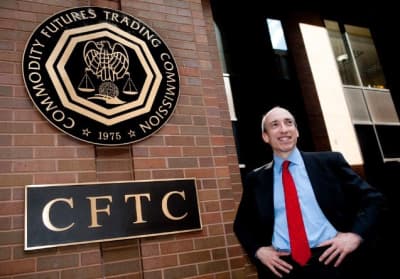 The CFTC, officially established in 1975, oversees operations conducted with trading assets — including binary options — on exchanges. Its activities are monitored by the US government, which prevents any possibility of collusion between the agency and market participants.
The CFTC's responsibilities include:
- protecting the interests of every investor;
- monitoring compliance with professional standards in dealings between market participants;
- ensuring the transparency of both markets and individual transactions;
- overseeing broker activities and their compliance with regulatory requirements.
All US brokers are required to meet the following obligations:
- reconcile client accounts at the end of each trading session;
- inform each client of the risks involved;
- provide staff training on the technical aspects of exchange trading and client communication standards;
- keep traders informed of their account status in a timely manner.
The above list is not exhaustive. Thanks to strict CFTC oversight, brokers operating under its regulation are generally able to offer traders a secure and well-structured trading environment.
Taxes on Binary Options in the USA
In the United States, profits from binary options trading are generally treated as capital gains and must be reported to the IRS. Traders are required to declare all trading income on their federal tax return using Schedule D and Form 8949, which record capital gains and losses from investment activity.
The applicable tax rate depends on the holding period of the position. Short-term gains — from trades opened and closed within the same calendar year — are taxed as ordinary income, at rates up to 37% depending on the trader's income bracket. Long-term gains, applicable to positions held for more than one year, qualify for reduced rates of 0%, 15%, or 20%.
Losses from binary options trading can be used to offset capital gains. If total losses exceed gains, traders may deduct up to $3,000 against other income in a given tax year, with any remaining losses carried forward to future years.
Tax treatment can vary depending on whether trading is conducted as a personal investment activity or as a business. Traders who operate on a professional basis may be required to report income differently and may be eligible to deduct certain business expenses. Given the complexity of US tax law and the potential for state-level obligations in addition to federal requirements, consulting a qualified tax professional is strongly recommended.
Conclusion
Trading binary options through regulated US exchanges is generally considered a more reliable way to participate in this market. However, the specifics of US legislation make it more difficult to get started with this instrument as a newcomer.
Access to American binary options exchanges is therefore not well suited to beginner traders, primarily because trading binary options in the US typically requires meeting higher capital thresholds than offshore alternatives. On the other hand, the strict government regulation of these transactions in the United States means that the risk of encountering a fraudulent broker is significantly lower than in less regulated markets.

To leave a comment, you must register or log in to your account.