
Traders around the world use gold — and silver — as a reliable store of value and a liquid asset for preserving and growing capital over the long term. Inflation, economic crises, and volatile national currency exchange rates are the main reasons investors continue to turn to precious metals that have held their value for centuries.
In recent years, however, gold's appeal as a long-term investment has shifted. While the metal has reached repeated all-time highs, its price action has become far more volatile, with sharp corrections following extended rallies. As a result, gold has become an excellent asset not only for long-term holding but also for short-term speculation.
Binary options are among the most convenient instruments for profiting from short-term price movements. In this article, we look at how to trade gold today and outline an optimal strategy that accounts for the specific characteristics of this asset.

Key Features of Gold Trading on Binary Options
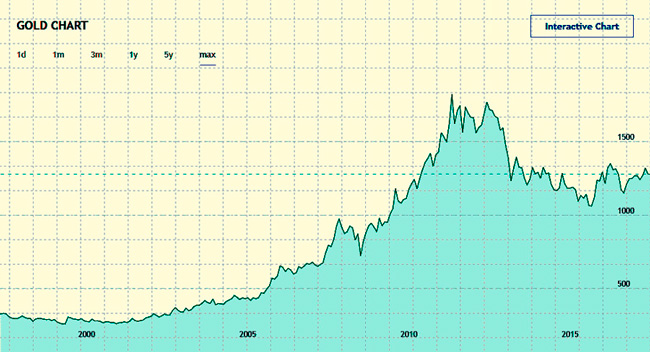
Gold is priced on exchanges in US dollars and is designated on the market as XAU/USD. A look at the historical price chart makes it immediately clear why gold has long been regarded as the definitive hedge against currency risk — its long-term trajectory has been one of steady appreciation, punctuated by periods of strong volatility.
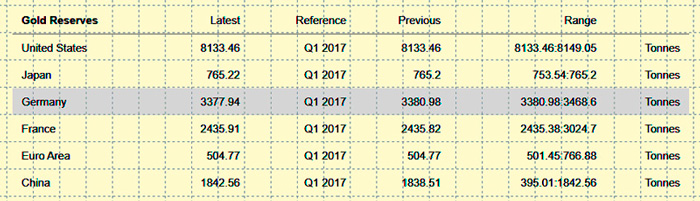
The United States holds the world's largest gold reserves, with Germany in second place. This is one of the primary reasons the US dollar is the world's dominant reserve currency, with the euro in second position. Beyond its gold reserves, the United States is also home to the largest concentration of powerful financial institutions — organisations that wield significant influence not only over the price of gold, but also over the exchange rates of other countries' currencies.
For short-term binary options trading, long-term risks are largely irrelevant. Gold is a highly volatile asset, which means expected profit and hedging levels can be estimated with reasonable accuracy. When trading short-term options, the trader's focus is on the current trend — not on the long-term ceiling the asset might eventually reach.
Gold responds well to standard chart analysis. For example, breakout trades at round price levels work particularly effectively. These levels do not need to be treated as exact triggers — a range of around 50 points above or below each level is a practical approach.
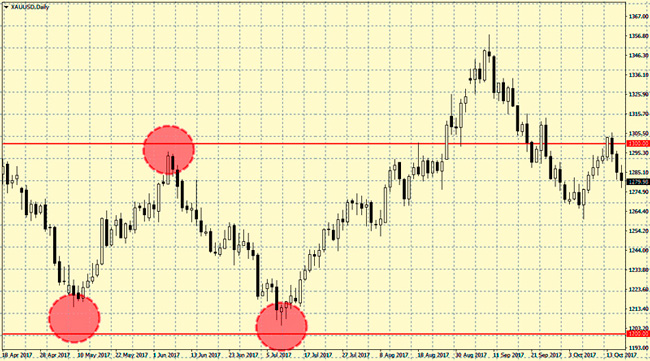
Another useful feature of gold trading is the frequency of clear false breakouts. When price briefly exceeds a key round level and then a candle closes back below it, we are looking at signs of a Morning Star formation — a strong indicator of a likely trend reversal. This allows a trader to exit a losing position early, either locking in the maximum available profit or cutting losses to a minimum.
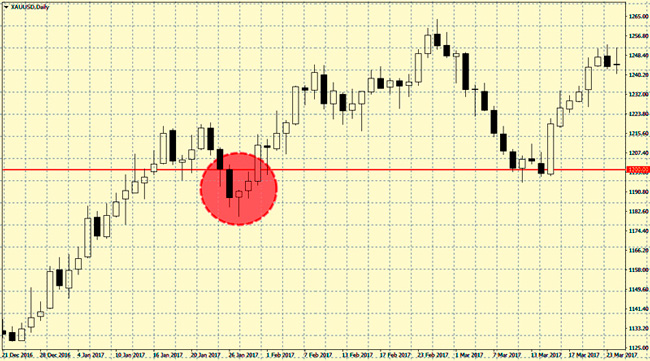
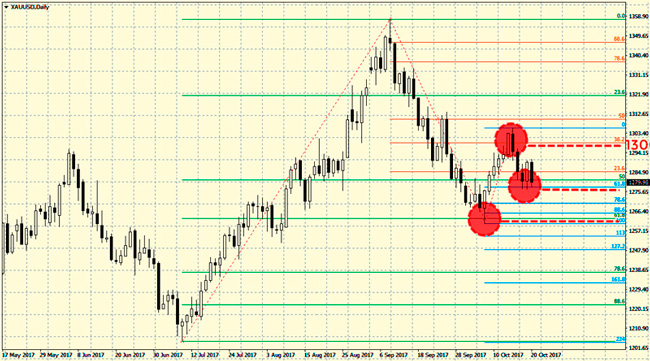
Fibonacci retracement levels are highly reliable on gold charts — corrections to 61.8% and 38.2% occur with notable regularity. When combined with the round-level approach, forecast accuracy improves significantly. In the example shown, a two-wave correction stabilised at approximately 60% of the prior move. The third wave subsequently broke through a major round level, confirming the effectiveness of both methods together.
Key Features of the Gold Trading Strategy
- Platform: any
- Asset: XAU/USD
- Timeframe: H1
- Expiration: 1 hour
- Trading session: American session
- Recommended brokers: Quotex, Pocket Option, Binarium.
Gold can be traded around the clock on exchanges worldwide, but London and Zurich are the most active trading centres. At 13:00 UTC, activity picks up sharply — this is clearly visible on the chart as a notable increase in transaction volume.
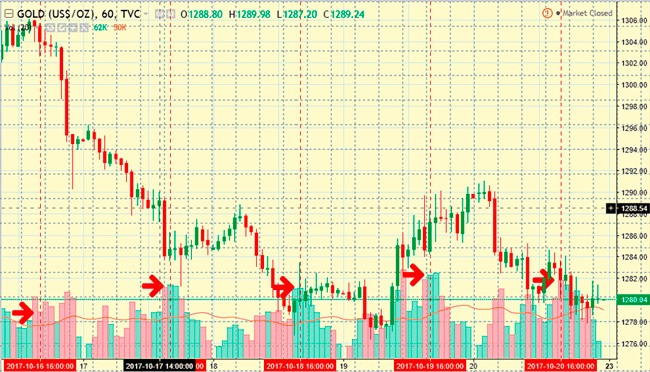
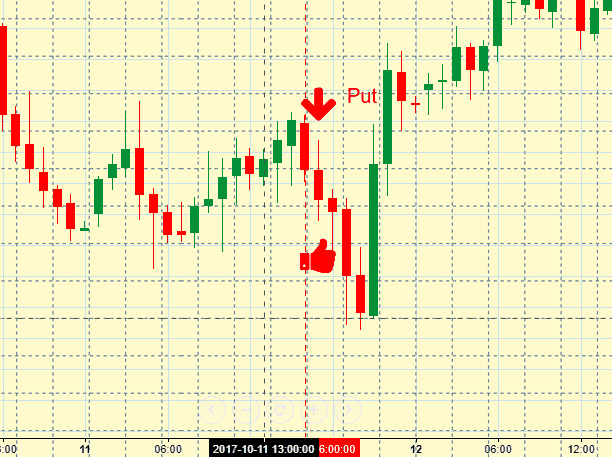
The strategy is straightforward. At 13:00 UTC, pull up the gold chart and observe the direction of the most recent hourly candle. By this point, London traders are fully active. The direction in which that candle closes will reliably point you toward a potentially profitable trade. If the candle is bearish, open a Put. If it is bullish, open a Call with a 1-hour expiration.
Pay close attention to the shape of the signal candle:
- The candle body should be larger than its wicks.
- A bullish candle should close near its high; a bearish candle should close near its low. This significantly improves the reliability of the signal.
Monitoring the news is equally important — major economic releases have a strong influence on the US dollar and can move the gold price sharply, even when other signals appear clear. If significant news is due imminently, consider reducing the expiration to 30 minutes, or simply wait for the release to pass before entering.
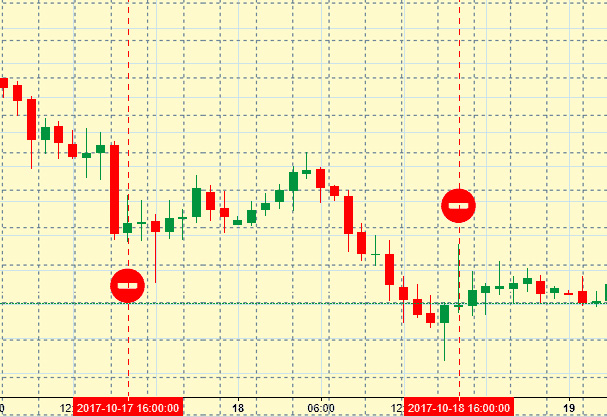
If the signal candle has a small body with no clear directional bias, trading on that candle is unwise. If the market itself has not yet committed to a direction, there is no reason to take on additional risk. Always assess both the size of the candle body and the length of its wicks before entering.
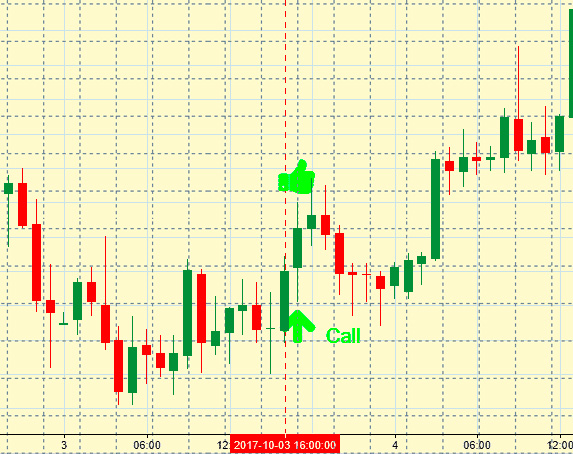
In the example below, the signal candle (marked by a vertical line) opened near the period's low and closed near its high — a clear indicator of a strong upward move. A candle of this shape at the London open is a reliable signal to go long. A 1-hour expiration on such a setup will frequently produce a profitable result. The same logic applies in reverse: a strong bearish candle closing near its low is a solid reason to open a Put.
Conclusion
Gold remains a powerful asset, but its role has evolved. Alongside its traditional function as a long-term store of value, it now offers an excellent speculative vehicle thanks to its frequent volatility. Disciplined technical analysis remains one of the most reliable tools for stock and commodity trading, and it gives traders a consistent opportunity to profit from gold price movements — in either direction.
Not sure how this strategy works? Leave a comment below, and subscribe to our YouTube channel WinOptionCrypto — we'll answer your questions in upcoming videos.

To leave a comment, you must register or log in to your account.